

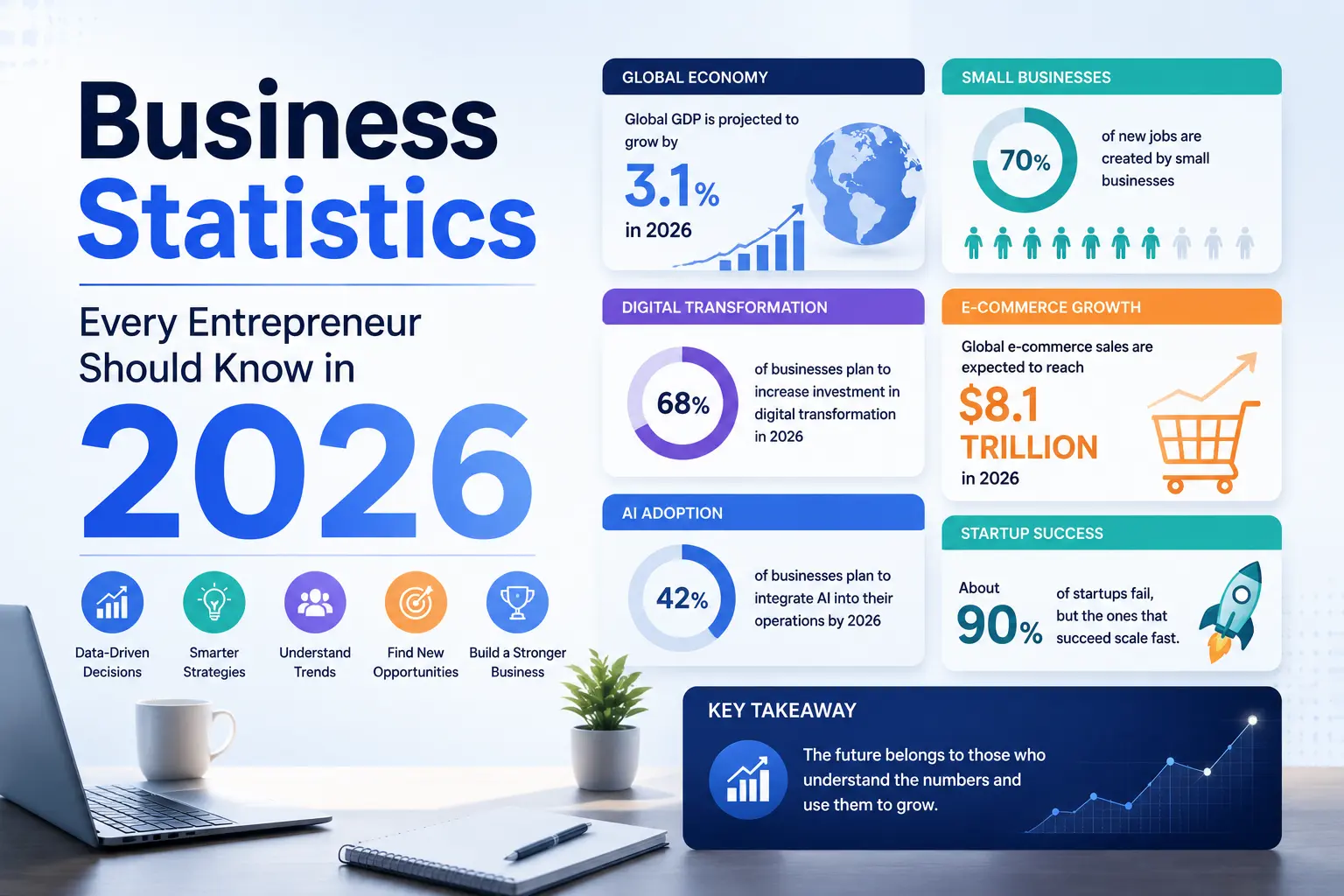
The entrepreneurial landscape in 2026 is defined by a rapid shift toward intelligent automation and highly adaptive business models. Entrepreneurs today are navigating a unique environment where the barrier to entry is lower due to digital tools, but the requirement for operational agility and strategic focus is higher than ever. Understanding the data driving these shifts is essential for anyone looking to build a resilient, growth-oriented venture.
The Rise of AI-Driven Entrepreneurship
Artificial intelligence has transitioned from a buzzword to a fundamental operational pillar. For the modern business owner, AI is no longer a luxury but a core utility that directly impacts profitability and time management.
-
Broad Adoption: Approximately 89% of small businesses now utilize AI in some capacity, representing a massive jump from just a few years ago.
-
Revenue Impact: Companies that successfully integrate AI tools into their workflows are over twice as likely to report revenue growth compared to those that remain reliant on manual processes.
-
Efficiency Gains: Business owners and managers save an average of seven hours per week by offloading repetitive tasks to AI, including content creation, customer communication, and administrative scheduling.
-
The ROI Factor: Current data indicates a high return on investment for AI integration, with businesses seeing an average ROI of 3.7x on their AI tool expenditures.
-
Strategic Upskilling: Owners who prioritize AI training for themselves and their teams report higher growth rates, positioning “AI literacy” as the top competitive differentiator in 2026.
Navigating the Entrepreneurial Intent
Despite global economic volatility, the drive to start new businesses remains at an all-time high. Entrepreneurs in 2026 are characterized by a “launch-first” mindset, often prioritizing speed to market over perfect conditions.
-
Surging Momentum: One in three U.S. adults reports an intent to start a new business or side hustle this year, reflecting a significant increase in entrepreneurial ambition.
-
Generational Shifts: Younger cohorts are leading the charge, with Gen Z showing the highest entrepreneurial intent, closely followed by Millennials who feel the most urgency to launch.
-
Financial Barriers: Money remains the primary obstacle for nearly half of all aspiring founders. Many are forced to rely on personal savings rather than external financing due to challenges in accessing traditional credit.
-
Operational Reality: While the desire to start is high, most entrepreneurs remain in the early stages of integration, with only a small fraction having fully embedded advanced digital tools into their core operations.
-
The “Urgency” Factor: A majority of new founders are choosing to launch despite imperfect economic conditions, prioritizing wealth-building and financial independence over waiting for a more stable climate.
The New Standard for Customer and Workplace Dynamics
Success in 2026 relies on balancing high-tech automation with human-centric connection. As customers demand more seamless interactions, businesses must adapt their internal and external strategies.
-
Hybrid Workforce Stability: Hybrid work models have stabilized as the preferred standard for remote-capable roles. This approach has proven highly effective in reducing turnover rates, with hybrid teams seeing significantly lower quit rates than fully in-office staff.
-
The Hybrid Customer Journey: Customers now expect a “human-always-available” experience. While AI handles routine inquiries and triage, high-value decisions and complex relationship-building are reserved for human interaction.
-
Trust as a Currency: As AI becomes more integrated into the customer experience, trust and data transparency have become primary competitive advantages. Businesses that explicitly manage their AI ethics and data governance are seeing stronger brand loyalty.
-
Real-Time Orchestration: Leading businesses are moving away from historical segmentation, instead using live behavioral data to interpret customer intent and deliver instant, personalized value.
Conclusion
The 2026 business landscape is one of hybrid realities: human creativity augmented by machine speed, and strategic agility paired with operational precision. Entrepreneurs who succeed in this environment will be those who stop viewing AI as a replacement for human work and instead use it as a catalyst for efficiency, allowing them to focus on the high-value, relationship-driven moments that define their brand.
FAQs
1. Is AI replacing employees in small businesses?
Data suggests the opposite; 87% of small business owners view AI as a tool that augments their workforce rather than a replacement for human staff. It is primarily used to handle administrative burdens so employees can focus on more strategic tasks.
2. What is the biggest challenge for new entrepreneurs in 2026?
Access to capital remains the most cited barrier, with nearly half of all aspiring business owners identifying funding as their top obstacle to launching.
3. Why is hybrid work still a major trend for entrepreneurs?
Hybrid work significantly reduces employee turnover and increases retention. Entrepreneurs who offer flexible arrangements gain access to a wider, more diverse talent pool compared to those requiring full-time office attendance.
4. What does “agentic commerce” mean for my business?
It refers to the shift where AI agents act on behalf of customers to conduct research and make purchases. To stay visible, businesses must ensure their content is structured and accurate so that these AI systems can easily interpret and recommend their products.
5. How can I measure the success of AI integration?
Move beyond sentiment and focus on hard metrics like time saved per week, reduced customer acquisition costs, and specific revenue growth linked to AI-driven campaigns.