
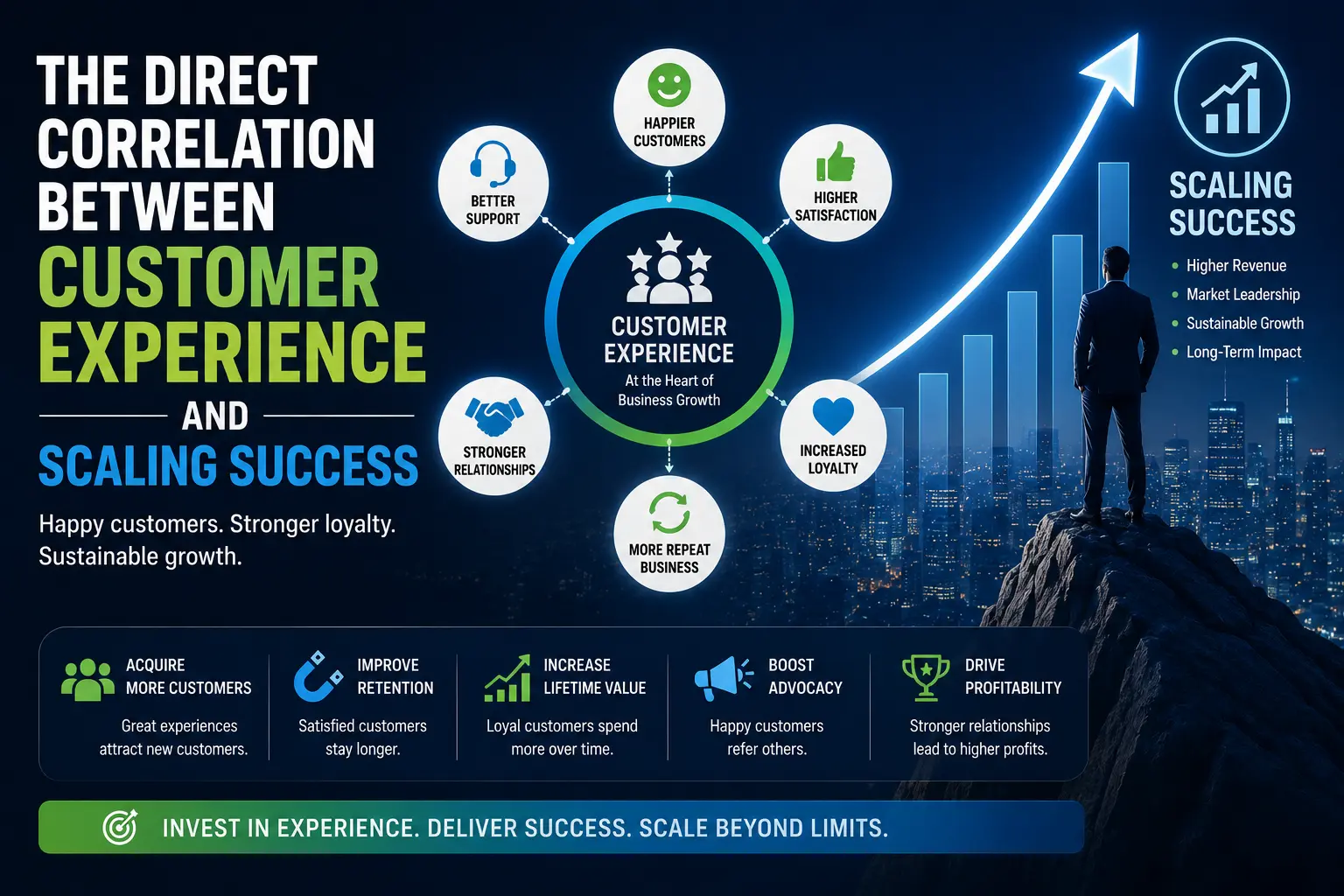
Customer experience (CX) serves as the silent engine behind sustainable expansion. While many businesses prioritize acquisition strategies to fill the top of the sales funnel, the long-term viability of a company hinges on how it treats existing patrons. A superior experience transforms one-time buyers into advocates, creating a compounding growth effect that stabilizes revenue regardless of market shifts.
Transforming Satisfaction into Recurring Revenue
Businesses that prioritize the end-to-end journey see significant shifts in their bottom-line performance. When every touchpoint is frictionless, the perceived value of a brand increases, justifying premium pricing and reducing the necessity for aggressive discounting. This shift moves the financial model away from the expensive cycle of constant customer replacement toward a model built on lifetime value.
-
Elevated Retention Rates: Seamless service prevents the silent churn that erodes market share, ensuring capital stays within the organization longer.
-
Organic Acquisition: Satisfied clients act as a decentralized sales team, driving new interest through word-of-mouth recommendations that carry high conversion potential.
-
Higher Customer Lifetime Value (CLV): Loyal buyers consistently increase their average order frequency and volume, maximizing the ROI of every initial acquisition.
-
Stabilized Revenue Streams: Predictive modeling becomes more accurate when retention is high, allowing for more strategic reinvestment and scaling efforts.
Strategic Pillars of Experience-Led Growth
To move beyond transactional interactions, businesses must operationalize empathy and efficiency. Growth is rarely the result of a single viral campaign; it is the output of consistent, well-executed processes that prioritize the user’s needs at every stage of their lifecycle.
-
Map the Emotional Journey: Identify pain points not just by checking metrics, but by understanding the user’s emotional state during each interaction to proactively resolve friction.
-
Unify Internal Data: Break down silos between support, marketing, and sales so that every team possesses a 360-degree view of the customer’s history and preferences.
-
Empower Front-Line Teams: Give employees the autonomy to solve problems immediately, turning potentially negative experiences into demonstrations of reliability.
-
Implement Feedback Loops: Actively integrate customer insights into product development cycles to ensure offerings remain aligned with real-world requirements.
Mitigating Operational Costs Through Proactive Care
Investing in high-quality CX creates a self-reinforcing cycle of efficiency. By resolving underlying issues before they become formal complaints, companies drastically reduce the workload on support departments. This proactive stance prevents the high cost of reactive crisis management and frees up resources that can be directed toward innovation and market expansion. High-quality support functions as an operational asset, protecting the brand’s reputation while streamlining internal workflows to support leaner, more agile growth.
Sustaining Momentum Through Intentional Service
Long-term success is earned through consistency. When a brand delivers a reliable experience, it builds the trust necessary to weather competitive pressure. Scaling isn’t just about adding more users; it is about scaling the quality of the interaction so that every new client receives the same level of care as the first. This commitment to the customer’s success ultimately secures the company’s future, turning every touchpoint into an opportunity for retention and growth.
Frequently Asked Questions
How does customer experience affect SEO rankings? Search engines monitor user engagement signals like bounce rates and dwell time. High-quality experiences keep users on a site longer, signaling relevance and authority to search algorithms.
Can CX improve marketing ROI? Yes, focusing on experience increases referral rates and repeat purchases. This reduces your Customer Acquisition Cost (CAC), allowing your marketing budget to go further.
What is the fastest way to improve CX? Start by identifying the most common bottleneck in your support tickets and resolving that specific issue permanently, rather than just handling the symptoms.
How do you measure the impact of CX on growth? Track Net Promoter Score (NPS) alongside Customer Lifetime Value (CLV). When these metrics trend upward together, you have a direct indicator of sustainable business growth.
Is CX only important for B2C companies? No, B2B companies often rely even more heavily on CX. Long-term contracts and high-value renewals depend entirely on the perceived partnership quality provided during the term.