

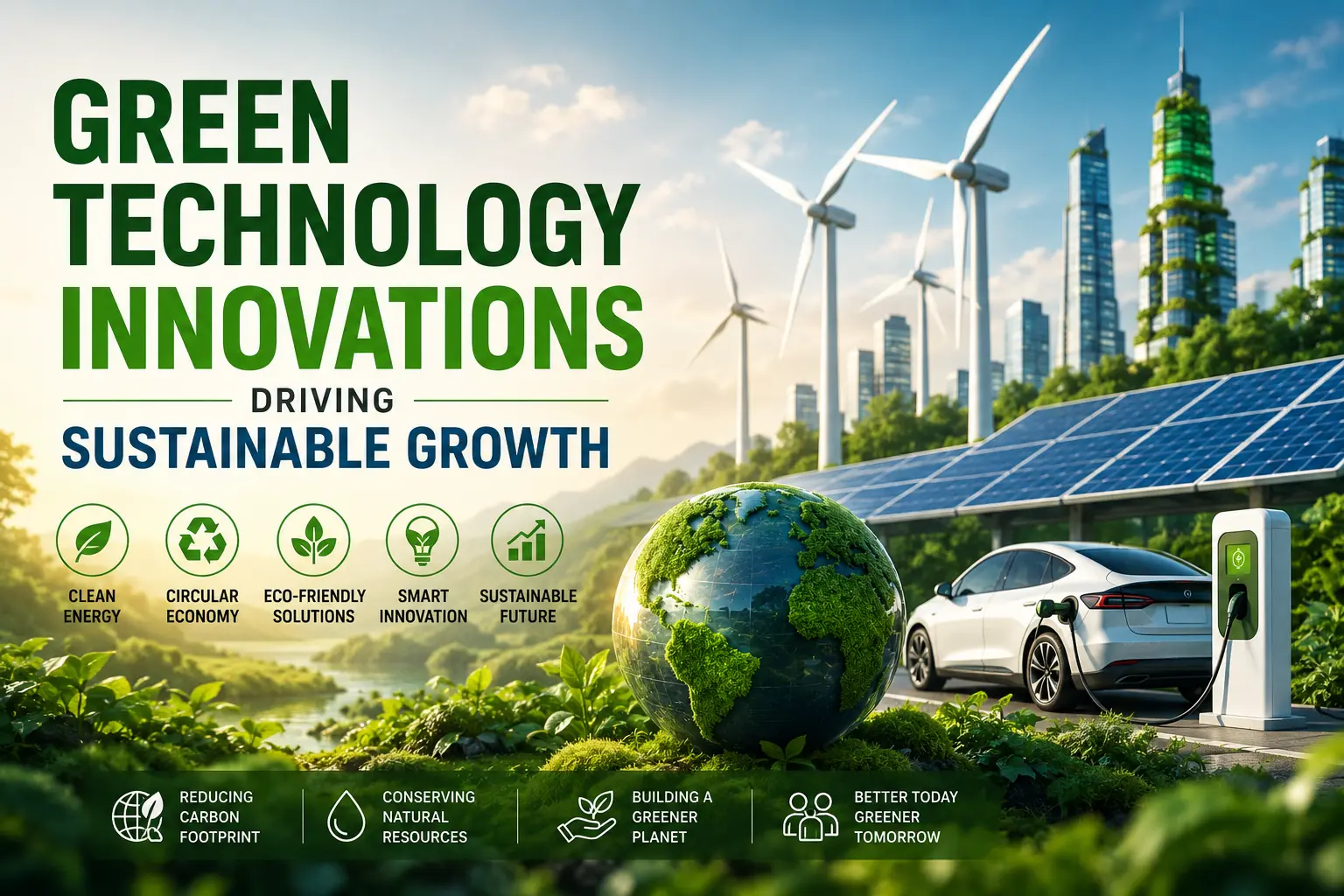
Sustainability has evolved from a corporate social responsibility initiative into a primary driver of competitive advantage. Modern green technology is no longer just about reducing emissions; it is a systematic approach to increasing operational efficiency, lowering costs, and meeting the complex demands of today’s regulatory environment. By integrating advanced digital tools with renewable solutions, businesses are transforming their operations to be both more profitable and environmentally resilient.
Core Pillars of Sustainable Tech Integration
The transition toward a green economy relies on technologies that move businesses away from wasteful, linear models—where materials are extracted, used, and discarded—toward circular ecosystems. These pillars enable organizations to track, measure, and optimize their environmental impact in real time.
-
Advanced Resource Monitoring: Internet of Things (IoT) sensors now provide granular visibility into energy, water, and fuel consumption, allowing managers to identify and eliminate waste across entire facilities instantly.
-
AI-Driven ESG Analytics: Artificial intelligence platforms process vast datasets to track Environmental, Social, and Governance (ESG) metrics, ensuring accurate reporting and helping businesses stay ahead of evolving global regulations.
-
Digital Twins for Efficiency: Virtual models of physical assets allow companies to simulate workflows, test scenarios, and optimize performance before implementing changes, significantly reducing the need for costly physical prototypes.
-
Renewable Energy Ecosystems: The integration of on-site solar, wind, and advanced energy storage solutions allows businesses to stabilize energy costs while minimizing dependence on carbon-heavy grid power.
Strategies for Operational Decarbonization
Achieving net-zero goals requires a methodical shift in how companies operate, procure, and produce. By leveraging software and hardware together, firms can achieve measurable improvements in sustainability while driving down operational expenses.
-
Supply Chain Transparency: Utilize blockchain-based tracking to verify the origin of raw materials, ensuring that every link in your supply chain adheres to ethical and environmental standards.
-
Predictive Maintenance: Implement machine learning algorithms to forecast equipment failure. This prevents the resource waste associated with emergency repairs and extends the lifespan of expensive machinery.
-
Cloud-Native Infrastructure: Migrating legacy on-premises servers to energy-efficient cloud providers allows businesses to benefit from shared economies of scale, drastically reducing the energy required to power IT operations.
-
Route Optimization: For logistics and transport fleets, AI-powered telematics reduce fuel consumption by calculating the most efficient paths and minimizing idle time.
Creating Long-Term Value Through Circularity
The ultimate goal of green technology is the creation of closed-loop systems. By focusing on refurbishment, recycling, and material recovery, businesses can lower their dependence on volatile commodity markets. This shift not only mitigates the risks of resource scarcity but also opens new revenue streams through the resale of reclaimed materials. When sustainability is embedded into the product development lifecycle—a practice known as eco-design—companies can produce goods that are easier to repair, upgrade, and recycle. This approach fosters deep brand loyalty among environmentally conscious consumers and attracts investors who increasingly view sustainability as a proxy for long-term management quality.
Frequently Asked Questions
Does green technology actually improve profitability?
Yes. By reducing energy consumption, minimizing raw material waste, and optimizing logistics, companies significantly lower their operating costs, which directly improves the bottom line.
How can small businesses afford these green technologies?
Many solutions, such as cloud computing and software-as-a-service (SaaS) energy monitoring, are scalable. Small businesses can start with small, high-impact changes that provide immediate return on investment.
Is green technology just a marketing trend?
No, it is a structural change. With global regulations like the Corporate Sustainability Reporting Directive and rising demand for transparency from investors, sustainability is now a core requirement for business viability.
How does IoT help with sustainability?
IoT provides the data necessary to see where waste happens. By monitoring electricity or water use in real time, you can automate adjustments that stop waste before it impacts your costs.
What is the biggest challenge in adopting green tech?
The initial integration can be complex, but the real challenge is moving from fragmented pilot projects to an enterprise-wide strategy that embeds sustainability into every department.