
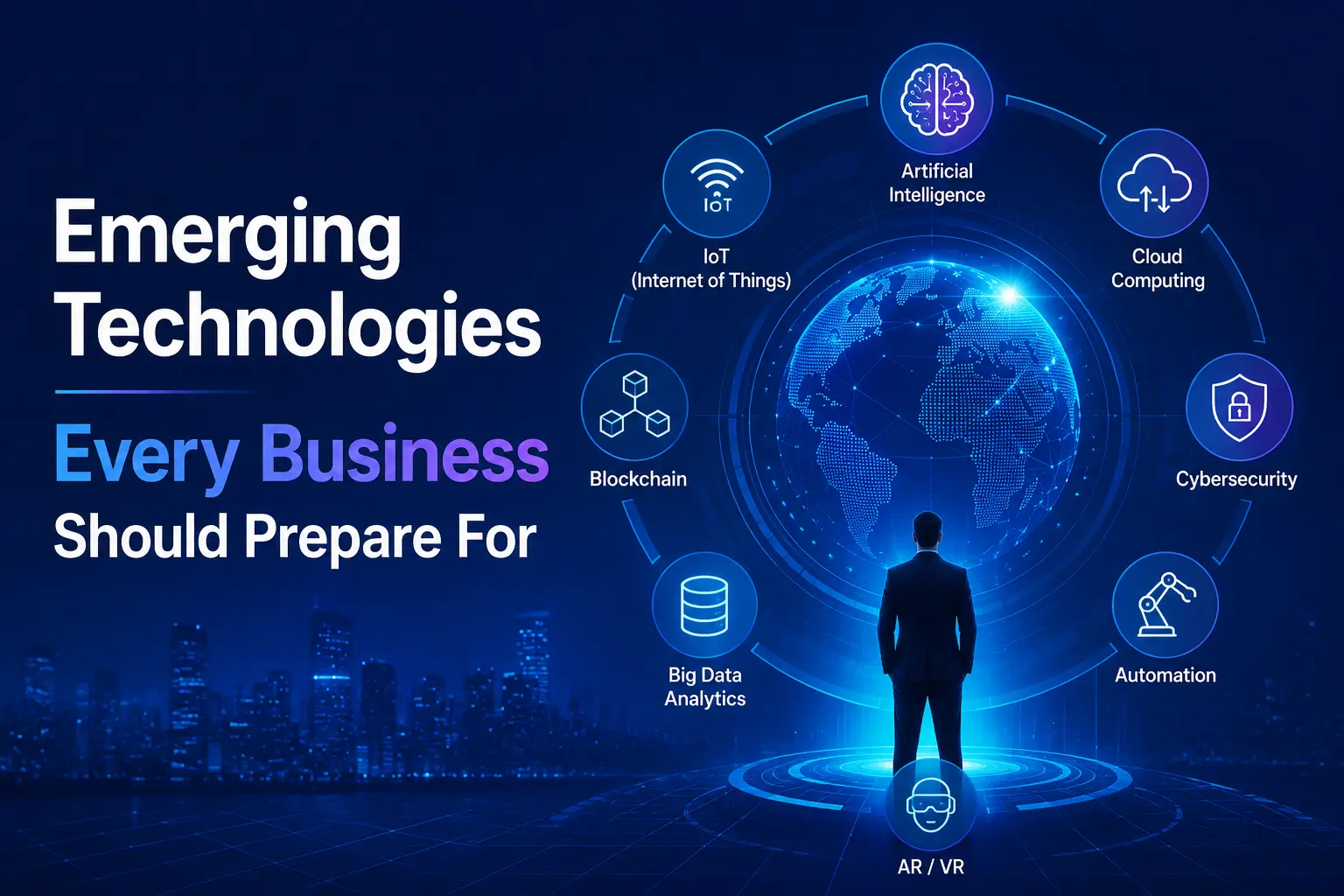
Innovation is not about adopting every new tool that hits the market. It is about identifying which technological advancements solve genuine operational bottlenecks and create sustainable value. As we move through 2026, the businesses that thrive will be those that integrate transformative technologies into their core workflows while maintaining a focus on human-centric outcomes.
Operational Automation Through Intelligent Agents
The next phase of business automation involves the transition from simple task-based software to intelligent, autonomous agents. These systems can navigate complex workflows, handle multi-step decision-making, and interact with multiple software platforms simultaneously to complete objectives. Unlike rigid automation scripts, these agents adapt to changing inputs, making them ideal for scaling operations without linear increases in headcount.
-
Autonomous Workflow Orchestration: Intelligent agents can manage end-to-end processes, such as procurement, inventory updates, or customer issue resolution, by synthesizing data across your entire tech stack.
-
Predictive Maintenance: For organizations relying on physical hardware or digital infrastructure, these agents can detect anomalies and initiate preventative actions before critical failures occur.
-
Dynamic Resource Allocation: Systems can now adjust operational budgets and project timelines in real-time based on fluctuating market demands, optimizing resource utilization.
-
Hyper-Personalized Operations: By processing vast amounts of internal data, these tools can generate unique pathways for every client, ensuring that service levels remain consistently high as you scale.
Integrating Decentralized Verification and Trust
As data becomes the most valuable currency, ensuring its integrity and security is paramount. Decentralized verification technologies offer a way to authenticate transactions, verify user credentials, and manage digital identity without relying on centralized, vulnerable clearinghouses.
-
Identity Verification: Streamline onboarding processes by allowing users to prove their credentials securely without needing to store sensitive, personally identifiable information in centralized databases.
-
Supply Chain Transparency: Utilize immutable ledgers to track the origin and movement of goods, providing verifiable proof of authenticity that builds deep trust with discerning customers.
-
Automated Compliance: Smart contracts can trigger automatic payments or legal processes when specific conditions are met, drastically reducing the time spent on contract administration and auditing.
-
Data Sovereignty: Give your clients ownership over their interactions with your brand, fostering a relationship built on transparency and mutual control.
The Convergence of Spatial and Immersive Tools
The digital interface is expanding beyond flat screens. Immersive technologies, including augmented reality and spatial computing, are creating new ways for businesses to present products, train employees, and interact with stakeholders. These tools allow for the “layering” of digital information onto the physical world, creating intuitive experiences that simplify complex information. Whether it is providing real-time technical guidance to a technician on the factory floor or allowing a customer to visualize a product in their own home, these interfaces reduce the gap between intention and action. The value lies in speed; by providing the right information in the right spatial context, you eliminate the cognitive load often required to understand complex data.
Conclusion
Adapting to emerging technology is a matter of strategic prioritization. Focus on tools that provide clear, measurable improvements to your current processes. Whether through autonomous agents, decentralized security, or immersive interfaces, the objective is to simplify complexity and enhance the user experience. By preparing your business for these shifts now, you build a foundation that is flexible, secure, and ready to meet the challenges of an increasingly digital marketplace.
Frequently Asked Questions
How do I decide which technology to adopt? Identify the biggest bottleneck in your current workflow. Only adopt technologies that directly simplify, accelerate, or provide clear data-driven value in solving that specific problem.
Do I need a large IT team to manage these tools? Not necessarily. Most modern platforms are designed for ease of integration, often featuring low-code or no-code interfaces that allow non-technical teams to manage and adapt the tools.
What is the biggest risk of ignoring these technologies? The biggest risk is operational stagnation. If your competitors become significantly faster, more transparent, or more personalized due to technology, you will find it increasingly difficult to compete.
Are these technologies secure for business data? Security is always evolving. Focus on providers that emphasize encryption, data sovereignty, and compliance with modern standards, as these are increasingly the baseline for any business technology.
How can small businesses get started? Start by automating one repetitive task or adopting a single platform that offers a measurable ROI. Growth in technology is best achieved through incremental, proven wins.