

If you’ve just found out your cat is expecting, you probably typed “how long are cats pregnant for” into Google at 11 PM while staring at her belly, trying to decide if it’s actually bigger or if you’re just imagining things. Fair enough. That was me three years ago, hovering over my cat Mishti with a flashlight, absolutely convinced she’d tripled in size overnight.
Here’s the short answer, so you’re not left waiting: a cat is pregnant for about 63 to 65 days, roughly nine weeks, give or take a few days depending on the breed and the individual cat. Some go into labor as early as day 61, others push it to day 70. If your cat crosses day 70 without any sign of labor, that’s your cue to call the vet — not panic, just call.
Now let’s get into the actual details, because “63 days” doesn’t tell you much about what’s happening week to week, what to watch for, or how to tell if something’s off.
So, How Long Is a Cat Pregnant, Exactly?
The scientific gestation window for cats sits between 58 and 70 days, with 63-65 being the average most vets will quote you. That’s shorter than dogs (around 63 days too, actually, funnily enough) and way shorter than humans. Nine weeks. That’s it.
A few things nudge that number around:
- Breed matters a little. Siamese cats, for instance, sometimes carry a day or two longer than the average domestic shorthair.
- Litter size plays a role. Smaller litters (one or two kittens) can occasionally go a bit past day 65, while larger litters tend to arrive slightly earlier.
- First-time mothers don’t necessarily deliver later or earlier — that’s a myth carried over from dog breeding circles. Cats don’t follow that pattern as strictly.
One thing I tell every cat owner who asks me this: don’t count from the day you noticed she was pregnant. Count from the estimated mating date, if you know it. If you don’t — and most people don’t, especially with outdoor or recently adopted cats — your vet can estimate gestational age fairly accurately using an ultrasound around day 25-35, and an X-ray closer to day 55 will actually let you count kitten skeletons. Yes, you can count them. It’s oddly satisfying and slightly terrifying at the same time.
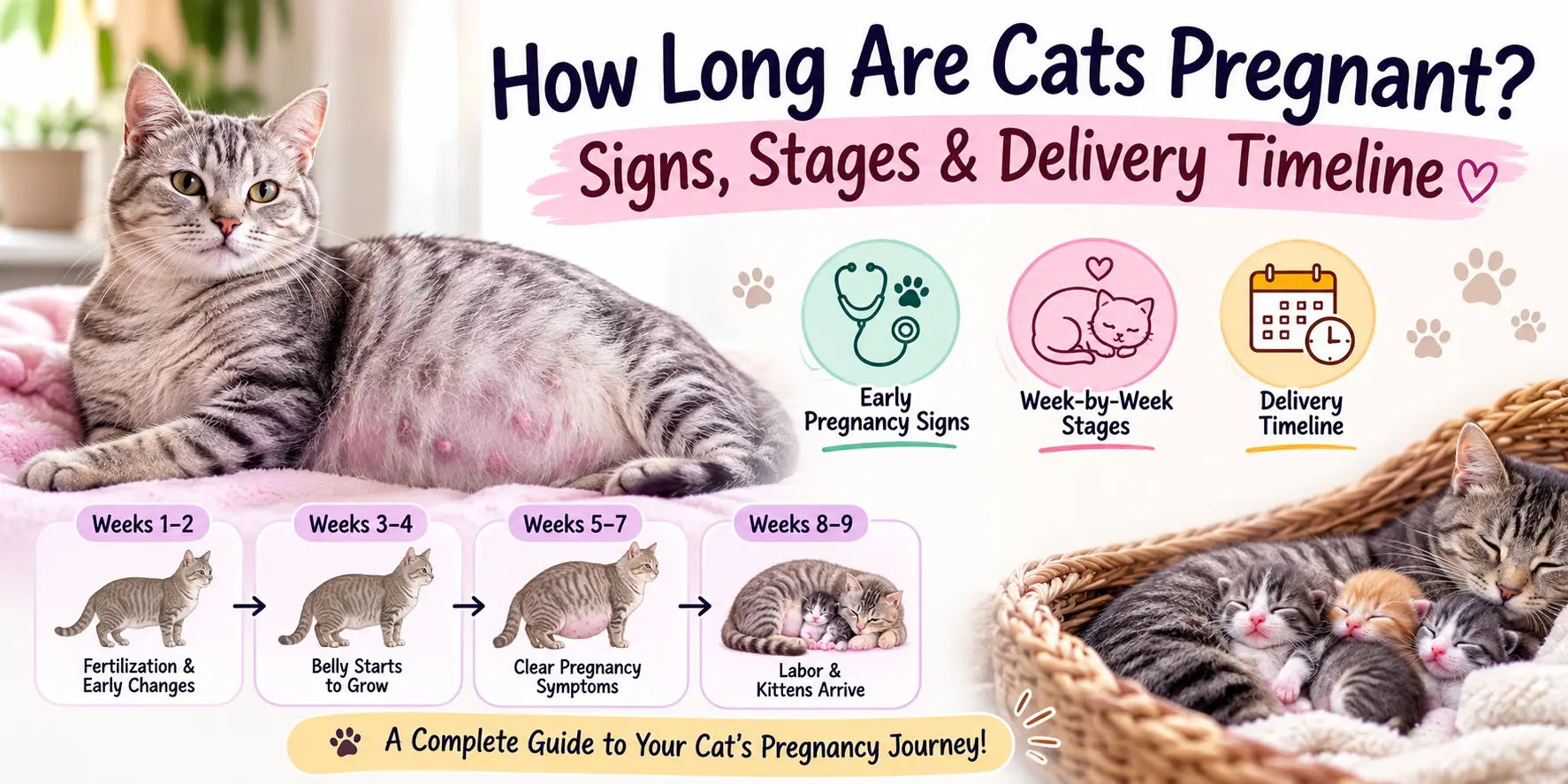
The Cat Pregnancy Timeline, Week by Week
I’m going to walk you through this in stages rather than a rigid day-by-day chart, because honestly, every cat’s timeline shifts a little, and pretending otherwise does you no favors.
Week 1-2: The Quiet Phase
Nothing visible happens here. Fertilization occurs, and the embryos are traveling and implanting. Your cat will act completely normal. If anything, some cats get slightly more affectionate or slightly more withdrawn — there’s no consistent pattern, so don’t read too much into behavior this early.
Week 3: “Pinking Up”
Around days 15-18, breeders and vets look for a sign called “pinking up” — the nipples become noticeably darker and more prominent. This is usually the first real physical clue that a mating actually resulted in pregnancy. If you missed the mating entirely, this is often the first moment you’d suspect anything at all.
Week 4-5: Morning Sickness (Yes, Really)
Cats can get a mild version of morning sickness around week 3-4, with occasional vomiting or a dip in appetite. It’s usually brief. If it lasts more than a day or two, or she stops eating entirely, that’s worth a vet visit — dehydration in a pregnant cat isn’t something to wait out.
This is also when a vet can confirm pregnancy via abdominal palpation (gently feeling for the developing kittens) — though I’d strongly discourage owners from trying this themselves. It’s easy to press too hard and hurt the developing fetuses. Let the professionals handle it.
Week 6-7: The Visible Bump
By now, there’s no mistaking it. Her belly rounds out, she’ll start eating noticeably more, and you might see slight movement in her abdomen in the final days of this stretch. Appetite typically increases by 25-50% compared to her normal intake — this is the point where switching to a kitten-formula food (higher calorie, higher protein) actually makes sense, and most vets recommend it starting around week 6.
Week 8-9: Nesting and Final Prep
This is where things get real. She’ll start looking for a quiet, enclosed spot — a closet, under a bed, inside a box you left out by accident. This is called nesting, and it’s your signal to set up a proper birthing box before she picks somewhere inconvenient (my cat once decided my laundry hamper was the ideal delivery room; I did not agree, but she wasn’t asking).
Her body temperature typically drops about 24 hours before labor begins — from a normal 101-102.5°F down to around 99°F. If you’re tracking this closely (some breeders do), a rectal thermometer reading below 100°F is a strong signal that labor is imminent.
Signs Labor Is Starting
Restlessness, pacing, loud or persistent vocalizing, and repeated visits to the nesting box are the classic early signs. She may stop eating in the final 24 hours. Panting without exertion is another marker — it looks alarming, but it’s a normal part of the labor process in cats, much like it is in humans.
Once actual contractions begin, the first kitten usually arrives within an hour. If she’s been straining hard for more than 30-40 minutes with no kitten appearing, or more than 2-3 hours pass between kittens with visible distress, that’s an emergency — not a “wait and see” situation. Call your vet immediately.
What If She Goes Past 70 Days?
This is the point where I’ll be direct with you: don’t wait it out. A cat that hits day 70 without labor starting needs veterinary attention. It could be nothing — a slightly miscalculated mating date is common — but it could also signal a stalled labor, a stillborn kitten, or a medical complication that needs intervention. I’d rather you make an unnecessary trip to the vet than a necessary one too late.
A Few Things I Wish Someone Had Told Me
- Don’t handle her belly a lot, even out of curiosity. Gentle affection is fine; poking around to “feel the kittens” isn’t, especially in the final weeks.
- Litter box changes matter. Toward the end of pregnancy, switch to a low-sided box — a heavily pregnant cat doesn’t love climbing over a tall rim.
- Isolate her from other pets in the final week or two, particularly male cats, who can sometimes act aggressively toward newborn kittens.
- Have a vet’s emergency number saved, not just Googled. You do not want to be searching for it at 3 AM mid-labor.
Quick Recap: How Long Do Cats Stay Pregnant?
If you only remember one number from this whole article, make it this: 63 to 65 days on average, with a normal range of 58 to 70. Anything meaningfully outside that range deserves a vet’s eyes on it, not a wait-and-see approach.
Pregnancy in cats moves fast compared to what most of us are used to. Blink, and you’re somewhere between week 4 and week 8. My advice, for what it’s worth: use that window to prepare rather than just wait. Get the nesting box ready early, line up your vet, and adjust her food around week 6. The rest, mostly, takes care of itself — cats have been doing this a lot longer than we’ve been Googling about it.
Frequently Asked Questions
1. How long are cats pregnant for?
On average, 63 to 65 days, with a normal range between 58 and 70 days from the date of mating.
2. How long is a cat pregnant compared to a dog?
Very similar, actually — dogs average around 63 days too. The bigger difference is in litter size and how visibly the pregnancy shows.
3. How can I tell if my cat is pregnant without a vet visit?
Darkening, enlarged nipples (“pinking up”) around week 3 is usually the earliest visible sign, followed by weight gain and appetite increase from week 4 onward. A vet exam is still the only reliable confirmation.
4. Pregnant cat, how long until she shows a visible belly?
Most cats start showing a noticeable bump around week 5-6, though this varies with litter size and body type.
5. How long do cats stay pregnant before labor signs begin?
Labor signs — nesting, restlessness, temperature drop — typically start in the final 24-48 hours of the 63-65 day window.
6. Can a cat’s pregnancy last longer than 70 days?
It’s uncommon and considered a red flag. If your cat passes day 70 without labor starting, contact your vet promptly.
7. How many kittens do cats usually have?
The average litter is 3-5 kittens, though it can range from 1 to as many as 8-10 in rare cases.
8. Do cats need special food during pregnancy?
Yes — most vets recommend switching to a kitten-formula food around week 6, since it’s higher in calories and protein to support the growing litter.
9. How long is a cat pregnant if it’s her first litter?
First-time pregnancies generally follow the same 63-65 day timeline as later ones — there’s no strong evidence that first litters run longer.
10. What’s the earliest a vet can confirm pregnancy?
Ultrasound can typically detect pregnancy around day 25-35. Palpation may detect it slightly earlier, but it’s best left to a vet.
11. Should I let my cat give birth alone or stay with her?
Most cats prefer privacy and handle labor instinctively, but staying nearby (not hovering) lets you step in quickly if something goes wrong.
12. How long after giving birth is a cat still recovering?
Physical recovery typically takes 1-2 weeks, though she’ll be caring for kittens for 6-8 weeks before they’re weaned.
13. Can cats get pregnant again right after giving birth?
Yes — cats can go into heat again within weeks of giving birth, even while still nursing. Spaying is strongly recommended once the litter is weaned, if not sooner.
14. What’s considered a high-risk cat pregnancy?
young cats (under 1 year), cats over 8 years, or those with underlying health conditions face higher risks and should be monitored closely by a vet throughout.
15. How long do cats stay pregnant if carrying a smaller litter?
Smaller litters can occasionally push slightly past the 65-day average, sometimes closer to 68-70 days, though this varies by cat.