

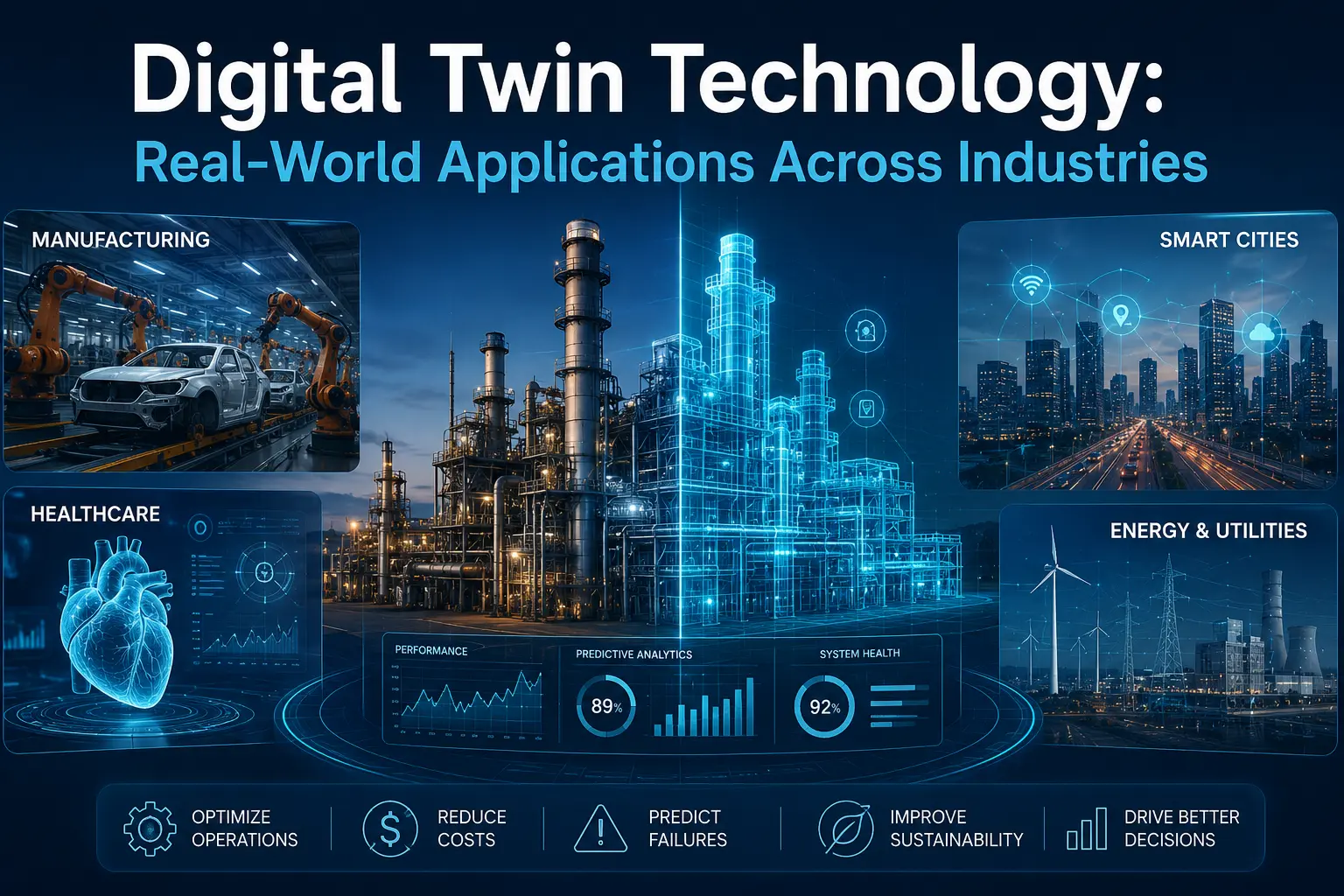
Digital twin technology has evolved from a futuristic concept into a cornerstone of operational intelligence. At its core, a digital twin is a dynamic virtual replica of a physical object, system, or process that continuously synchronizes with real-world data. Unlike static models, these virtual counterparts use sensors, cloud computing, and artificial intelligence to mirror their physical equivalents in real time. This bidirectional bridge between the physical and virtual realms allows organizations to simulate scenarios, predict outcomes, and optimize performance with unprecedented precision.
Transforming Core Industrial Operations
The primary advantage of digital twin technology lies in its ability to move operations from reactive to proactive. By analyzing real-time performance data, industries can forecast failures, test process changes, and improve overall productivity without interrupting actual workflows.
-
Manufacturing Efficiency: Factories use digital twins to monitor production lines, identifying bottlenecks and optimizing throughput. By virtually simulating machine stress, engineers can detect potential issues before they manifest as costly downtime.
-
Energy and Utility Management: Utility providers create replicas of power grids and renewable energy systems. These models help balance energy distribution, integrate renewable sources more effectively, and ensure grid stability.
-
Predictive Asset Maintenance: Instead of relying on rigid, schedule-based maintenance, digital twins enable condition-based servicing. Assets are repaired only when performance data deviates from their unique operational profile, extending equipment lifespan.
-
Supply Chain Resilience: A virtual replica of an end-to-end supply chain allows companies to stress-test logistics scenarios, ensuring they can pivot quickly in response to global disruptions or local delays.
Critical Applications in High-Stakes Fields
Beyond industrial manufacturing, digital twins are becoming essential for managing complex human and infrastructure systems where accuracy and foresight are vital.
-
Healthcare and Precision Medicine: Virtual patient models integrate data from medical records, imaging, and wearable devices to simulate how an individual might respond to specific treatments, facilitating safer and more personalized clinical decisions.
-
Smart City Planning: Urban planners leverage digital twins to model traffic flow, energy consumption, and environmental impacts. These replicas allow for “what-if” simulations, such as testing the impact of new public transit routes or emergency evacuation plans.
-
Construction and Facility Lifecycle: From initial design through demolition, digital twins provide a central source of truth for architects and engineers. They enable real-time monitoring of building systems, such as HVAC energy consumption, to ensure long-term sustainability and occupant comfort.
-
Aerospace and Aviation: Aircraft engines and critical components are among the most complex systems to manage. Digital twins monitor these parts throughout their entire lifecycle to maximize fuel efficiency, safety, and reliability.
The Future of Decision-Making
The integration of digital twins with artificial intelligence is unlocking new levels of automation. By processing vast amounts of historical and present-day data, these systems do not just report on what is happening—they recommend corrective actions or execute autonomous adjustments. This transition toward predictive intelligence is helping organizations reduce waste, lower carbon footprints, and innovate faster than their competitors. As the technology becomes more accessible, it is moving from a luxury for large-scale enterprises to a core requirement for any business seeking to maintain agility in a complex, data-driven environment.
Frequently Asked Questions
What is the main difference between a simulation and a digital twin?
A simulation is typically a standalone prediction, whereas a digital twin maintains a bidirectional, real-time data connection with its physical counterpart, allowing it to update as the real-world asset changes.
How does a digital twin improve sustainability?
Digital twins identify hidden inefficiencies, such as excessive energy usage or material waste, allowing businesses to optimize their processes and reduce their overall environmental footprint.
Do I need a large budget to start using digital twin technology?
Not necessarily. Many organizations begin by creating a digital twin of a single, critical asset rather than an entire system, allowing them to achieve measurable ROI before scaling.
What technologies are required to power a digital twin?
The core components include Internet of Things (IoT) sensors for data collection, cloud computing for storage, AI for analysis, and robust connectivity to ensure real-time synchronization.
Can digital twins be used in non-industrial sectors?
Yes. Beyond manufacturing, they are increasingly used in urban planning, healthcare for patient modeling, and even retail to optimize store layouts and customer experiences.