
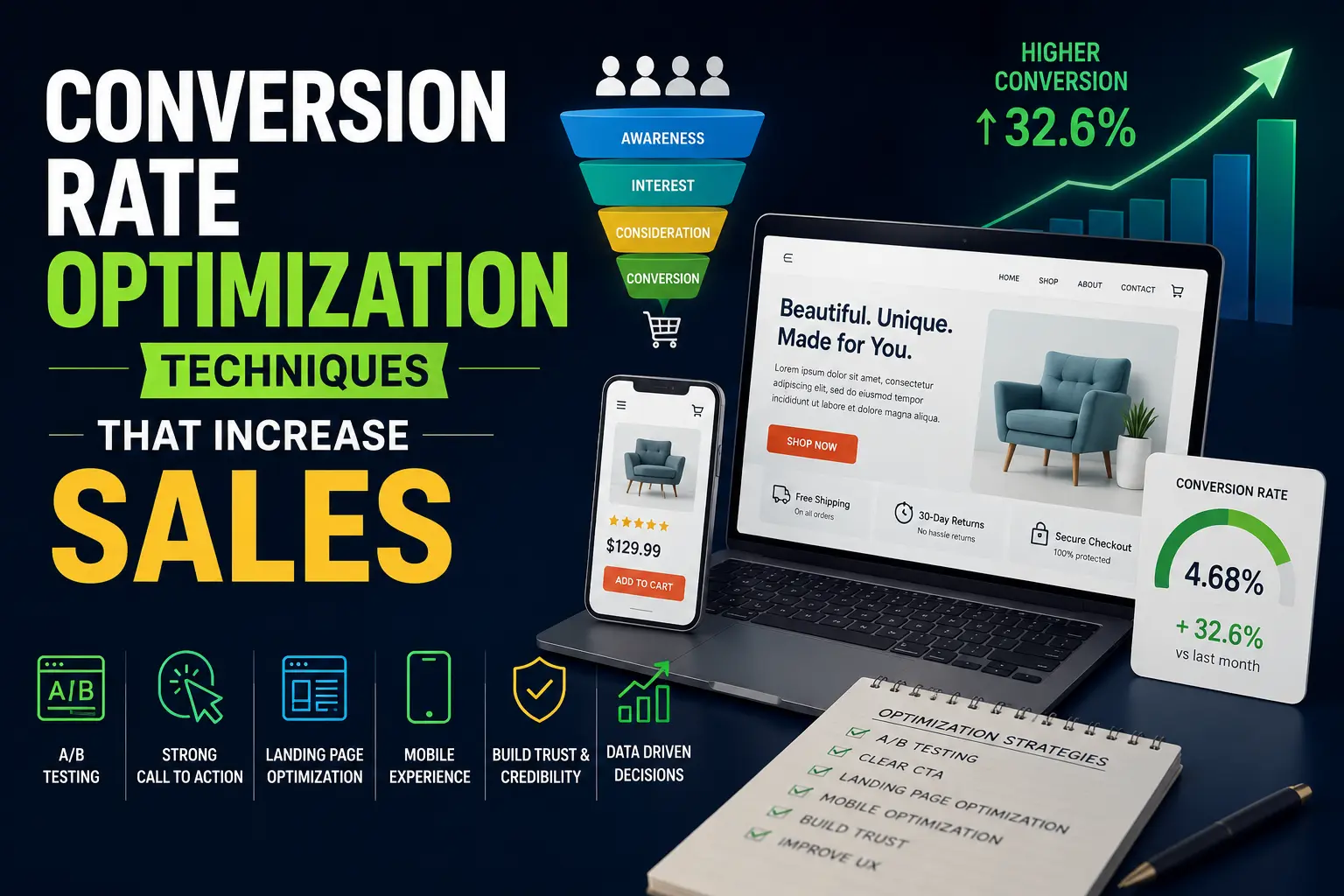
Conversion rate optimization (CRO) is the practice of increasing the percentage of visitors who take a desired action on your website. Rather than simply driving more traffic, CRO focuses on making the traffic you already have more valuable. By refining the user journey and removing friction points, you can significantly boost sales without increasing your marketing spend.
Analyzing Friction in the Customer Journey
The primary goal of any website should be to lead the visitor toward a transaction with as little resistance as possible. Friction often hides in plain sight, such as complex checkout forms, unclear navigation, or slow loading speeds. Identifying these barriers requires looking at your site from the perspective of a user who is unfamiliar with your interface. When a path is intuitive, the psychological barrier to purchasing drops, naturally leading to a higher frequency of completed orders.
-
Simplified Navigation: Reduce the number of clicks required to reach a product page by organizing menus logically and using clear search functionality.
-
Mobile-First Design: Ensure every button, image, and text block scales perfectly for mobile devices to prevent high bounce rates on handheld screens.
-
Trust Indicators: Place security badges, verified reviews, and transparent return policies near “Add to Cart” buttons to reassure users at the moment of hesitation.
-
Speed Optimization: Compress high-resolution images and leverage caching to ensure pages load instantly, as every extra second of delay directly reduces the likelihood of a sale.
Strategic Tactics for Behavioral Influence
Once the technical barriers are cleared, you can use subtle behavioral cues to nudge visitors toward completing a purchase. These techniques focus on framing your offer in a way that highlights value and urgency while maintaining brand integrity.
-
Value-Based Copywriting: Focus your headlines and descriptions on the benefits the user receives, rather than just technical specifications.
-
Strategic Call-to-Action (CTA) Placement: Use high-contrast colors for buttons and place them consistently in areas where the user’s eye naturally gravitates.
-
Limited Choice Environments: Reduce decision paralysis by streamlining product selections or using “bestseller” labels to guide users toward your most popular items.
-
Social Proof Integration: Display user-generated content, such as photos of actual customers using your product, to bridge the gap between digital interaction and real-world confidence.
Utilizing Data for Continuous Improvement
Optimization is not a one-time project; it is a cycle of testing and refinement. Instead of making major changes based on intuition, use A/B testing to compare two versions of a landing page to see which produces better results. By focusing on one element at a time—such as headline variations, button text, or form length—you can incrementally improve performance. This empirical approach turns website management into a disciplined process of improvement, ensuring that your sales growth is driven by verifiable performance rather than guesswork.
Mastering the Path to Purchase
Refining your conversion process creates a more seamless experience that benefits both the business and the customer. By removing technical hurdles, applying behavioral psychology, and committing to data-driven testing, you build a sustainable machine that consistently turns visitors into buyers. Focus on making the path from entry to transaction as clear and rewarding as possible, and your sales figures will reflect that commitment to user success.
Frequently Asked Questions
What is the most important element for conversion? The value proposition—the clear answer to why a customer should buy from you instead of someone else—is the foundation upon which all other conversion tactics are built.
How many variations should I test at once? For the most accurate results, test one element at a time, such as changing only the color of a CTA button or the wording of a single headline.
Why are mobile users harder to convert? Mobile users often have less patience and more distractions. If your mobile checkout is not extremely fast and simple, they will likely abandon the process.
What is a “good” conversion rate? Conversion rates vary significantly by industry, but instead of chasing a generic benchmark, aim to improve your own historical performance by 5–10% each quarter.
How can I reduce cart abandonment? Offer guest checkout options to avoid forcing account creation and show all shipping costs upfront so there are no surprises during the final step of the purchase.