

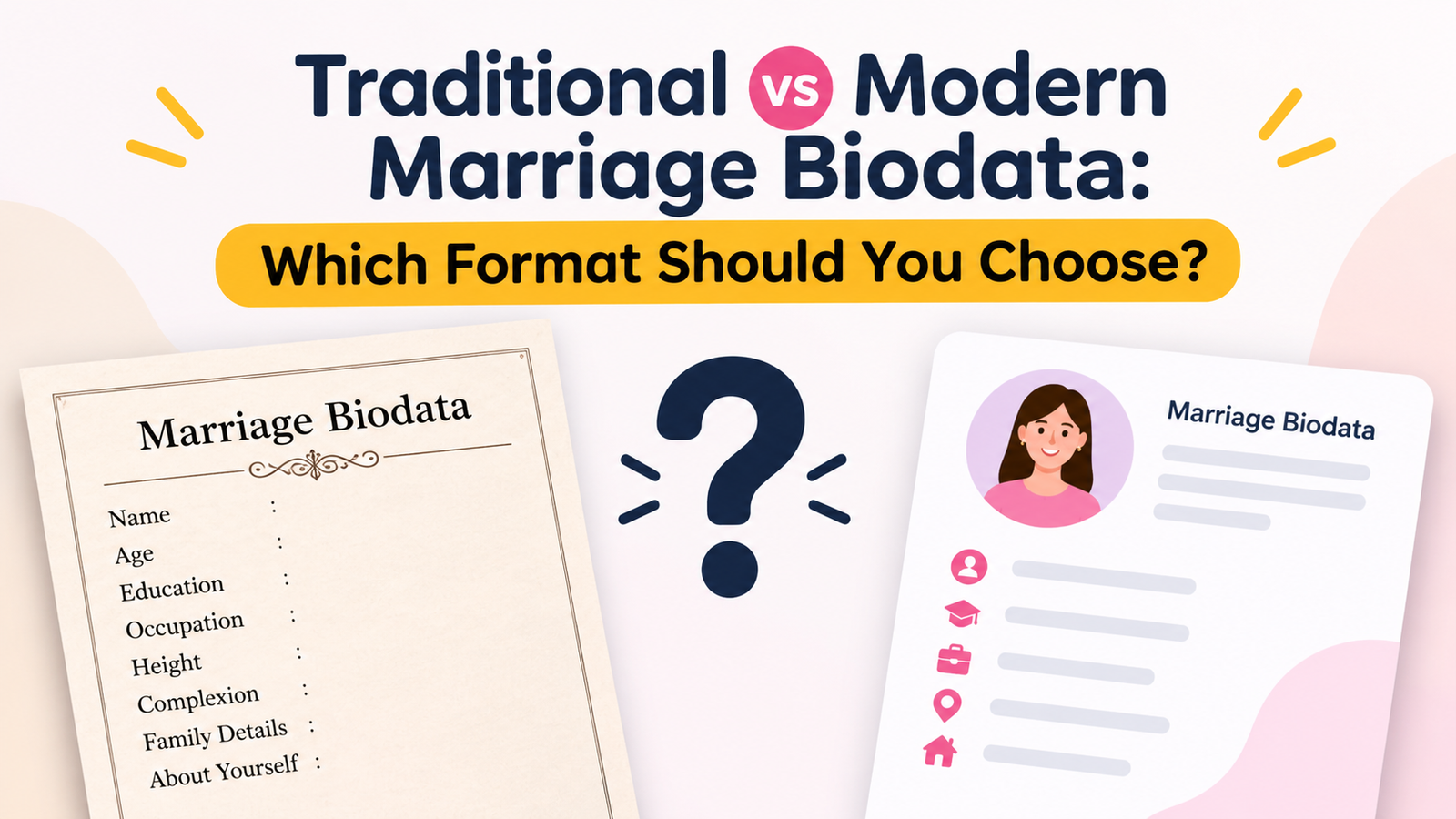
Choosing a marriage biodata format can feel confusing when you are unsure how much detail to include. A traditional format focuses on family background, education and cultural details, while a modern one gives more space to your personality, interests and relationship expectations. Neither is automatically better. The right choice depends on your preferences, family expectations and the kind of introduction you want to create.
1. Understand the Traditional Marriage Biodata Format
A traditional marriage biodata format usually follows a simple, structured layout. It highlights essential details such as your name, age, education, profession, family background and other information relevant to a matrimonial introduction.
In many Indian families, this format may also include community details, mother tongue, hometown and horoscope information. These details can be useful when they are important to the individuals and families involved.
The main advantage is familiarity. Parents and prospective matches can quickly find the information they are looking for without going through lengthy descriptions. If your family prefers a formal introduction or considers cultural compatibility important, a traditional format may be a suitable starting point.
2. Explore the Modern Marriage Biodata Format
A modern marriage biodata format goes beyond basic personal and family information. It allows you to introduce your personality, interests, lifestyle and future aspirations alongside your education and career.
For example, you could mention your hobbies, favourite activities, approach to work-life balance and values you hope to share with a partner. The design may use clean fonts, clear headings and subtle colours to make the document visually appealing.
This format can be useful if you want a prospective match to understand more about your everyday life and expectations. It also gives you greater flexibility to express yourself in your own words rather than relying entirely on standard biodata fields.
3. Compare Both Formats Before Deciding
The key differences between traditional and modern biodata formats come down to their presentation, content and purpose.
| Feature | Traditional Format | Modern Format |
| Main focus | Family and personal details | Personality and compatibility |
| Design | Formal and straightforward | Clean and personalised |
| Content | Mostly factual information | Facts with a personal introduction |
| Family background | Often detailed | Included as preferred |
| Horoscope details | Included when relevant | Optional |
| Best suited for | Conventional matrimonial introductions | More personalised introductions |
Both formats can communicate essential information effectively. Your choice should reflect what you want to share rather than what a particular format is expected to contain.
4. Consider Your Family’s Expectations
Family preferences can influence which marriage biodata format works best. If your family values a conventional approach, a traditional layout may make the introduction more familiar and comfortable for everyone involved.
However, if you prefer a more individual approach, you can include a short personal introduction alongside the usual family and professional details. Discussing the format beforehand can help you decide which information should be included.
Remember, family expectations matter, but your comfort with the information being shared matters just as much.
5. Decide How Much of Your Personality to Include
A modern format gives you more room to describe your interests, values and expectations from marriage. You can mention whether you enjoy travelling, reading, fitness, creative activities or spending time with family.
You may also share what you value in a relationship, such as mutual respect, honest communication and support for each other’s ambitions. Keep these details genuine and concise.
If you prefer a traditional format, you can still include a few personal details. You do not need to change the entire layout to make your biodata feel more individual.
6. Should You Include Horoscope Details?
Horoscope information is an important consideration for some families when preparing a marriage biodata. Depending on your preferences, you may include your date, time and place of birth, along with your rashi or nakshatra.
If horoscope matching is part of your matrimonial process, ensure that these details are accurate before sharing the document. You can also consult an astrologer if you need help understanding your birth chart or related astrological information.
Astrology is a personal or family preference, so this section is optional. Both traditional and modern formats can accommodate it without making it the central focus of your introduction.
7. Can You Combine Traditional and Modern Formats?
Absolutely! A combination of both formats can give you a structured yet personalised biodata. Start with essential personal details, education, profession and family background. Then add a brief introduction about your interests, values and expectations from a relationship.
Keep the design simple, with readable fonts and clearly organised sections. Include horoscope details if they are relevant to you, and avoid adding unnecessary personal information.
This approach allows you to respect family preferences while presenting yourself in a way that feels natural and authentic.
Final Thoughts
The best marriage biodata format is one that reflects your preferences and communicates the information that matters to you. A traditional format offers familiarity and structure, while a modern format provides more room for personality and individual expectations. You can also combine the two to create a balanced introduction. If you need guidance on horoscope-related aspects of matrimonial decisions, Astroyogi offers astrology resources and consultations. Ultimately, your biodata should help start a meaningful conversation, not define your entire personality.