

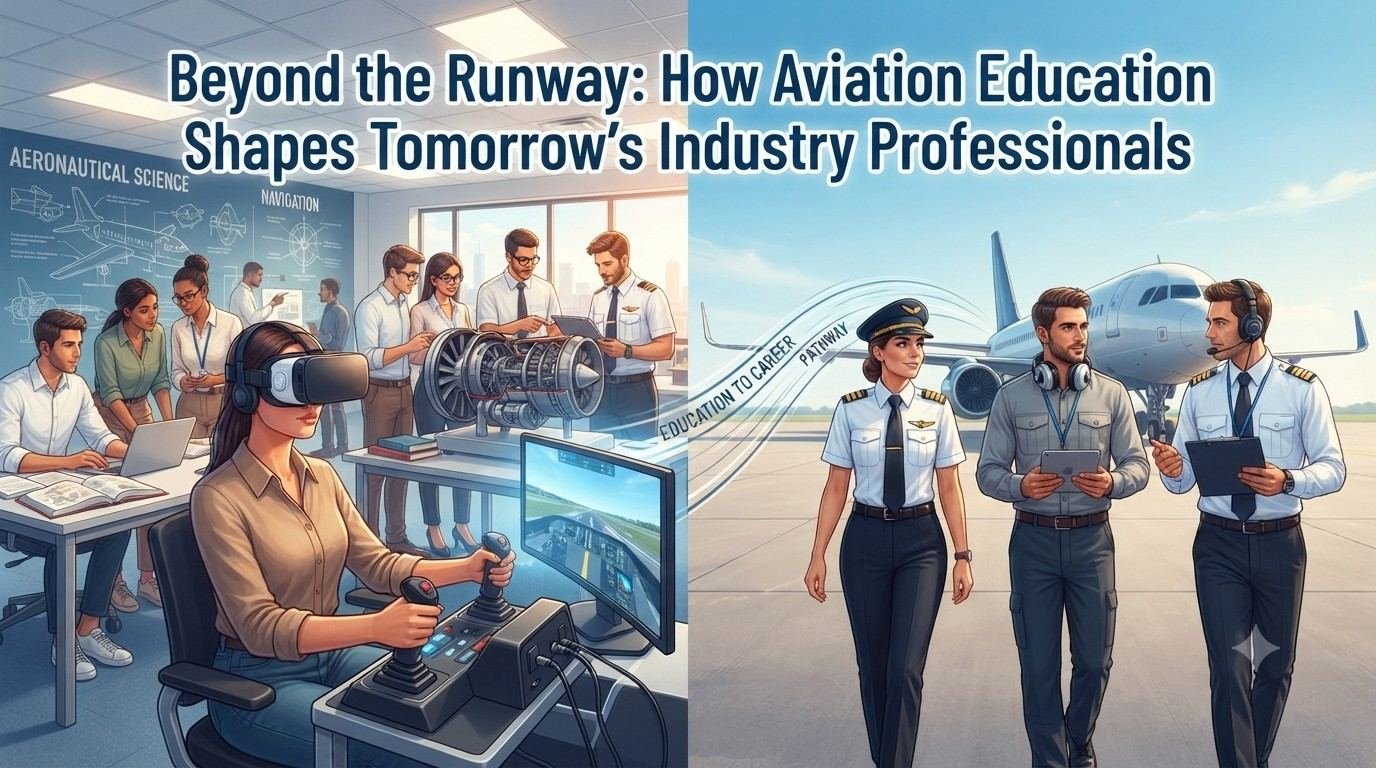
The aviation industry is more than aircraft, airports, and air travel. It is a dynamic sector that connects countries, supports international trade, and creates employment opportunities across different fields. As the industry continues to develop, the demand for skilled and knowledgeable professionals is also increasing. Aviation education plays an important role in preparing students to understand industry operations and develop the skills required for future opportunities.
Understanding the Growing Aviation Industry
The aviation sector includes several departments, such as airport operations, airline management, ground handling, passenger services, cargo management, and aviation safety. Each department contributes to the smooth functioning of the industry.
With increasing passenger movement, technological developments, and international connectivity, airports and airlines are continuously improving their services. This creates opportunities for graduates who understand aviation operations and business management.
Students who pursue aviation-related courses can explore different career paths based on their interests, qualifications, and professional skills.
Why Aviation Education Matters
Choosing the right educational programme helps students build a strong foundation before entering the professional world. Aviation education introduces learners to important industry concepts, including airport administration, airline operations, customer service, aviation regulations, and management practices.
Unlike general academic learning, career-oriented aviation programmes also focus on developing practical knowledge. This helps students understand how different departments work together in real-world environments.
Programmes such as B.Sc Aviation and BBA Airlines and Airport Management provide students with opportunities to explore the operational and managerial aspects of the aviation sector.
Developing Skills Beyond Academic Knowledge
Working in the aviation industry requires more than a qualification. Employers often look for individuals who can communicate effectively, work in teams, solve problems, and handle responsibilities professionally.
Some important skills include:
-
Communication Skills: Interacting confidently with passengers, colleagues, and business professionals.
-
Customer Service: Understanding passenger needs and providing appropriate assistance.
-
Problem-Solving: Managing unexpected situations calmly and responsibly.
-
Teamwork: Coordinating with different departments to maintain smooth operations.
-
Professional Grooming: Maintaining a professional attitude and workplace appearance.
Developing these abilities during the learning period can help students become more confident when applying for employment opportunities.
The Importance of Practical Learning and Industry Exposure
Practical learning is an important part of professional education. Classroom knowledge becomes more meaningful when students understand how it applies to actual workplace situations.
Industrial visits, workshops, presentations, internships, and skill-development sessions help students gain a broader understanding of industry practices.
Educational institutions that focus on both theoretical and practical learning can help students become familiar with workplace expectations before graduation.
Exploring Aviation Education at Fighter Wings Aviation College
Students interested in building their knowledge in aviation and related industries can explore the programmes offered by Fighter Wings Aviation College.
The institution offers programmes including B.Sc Aviation, BBA Airlines and Airport Management, and other industry-related courses. These programmes introduce students to different aspects of aviation, management, logistics, and professional development.
With a focus on academic learning, industry exposure, and placement assistance, students can work towards developing the knowledge and confidence required for their chosen professional paths.
Conclusion
The future of aviation depends not only on advanced aircraft and modern airport infrastructure but also on skilled professionals who understand the industry. Aviation education helps students develop the academic foundation, practical awareness, and professional abilities needed to explore opportunities in this evolving sector.
For students interested in aviation, choosing a suitable course can be an important first step towards building a rewarding professional future.