

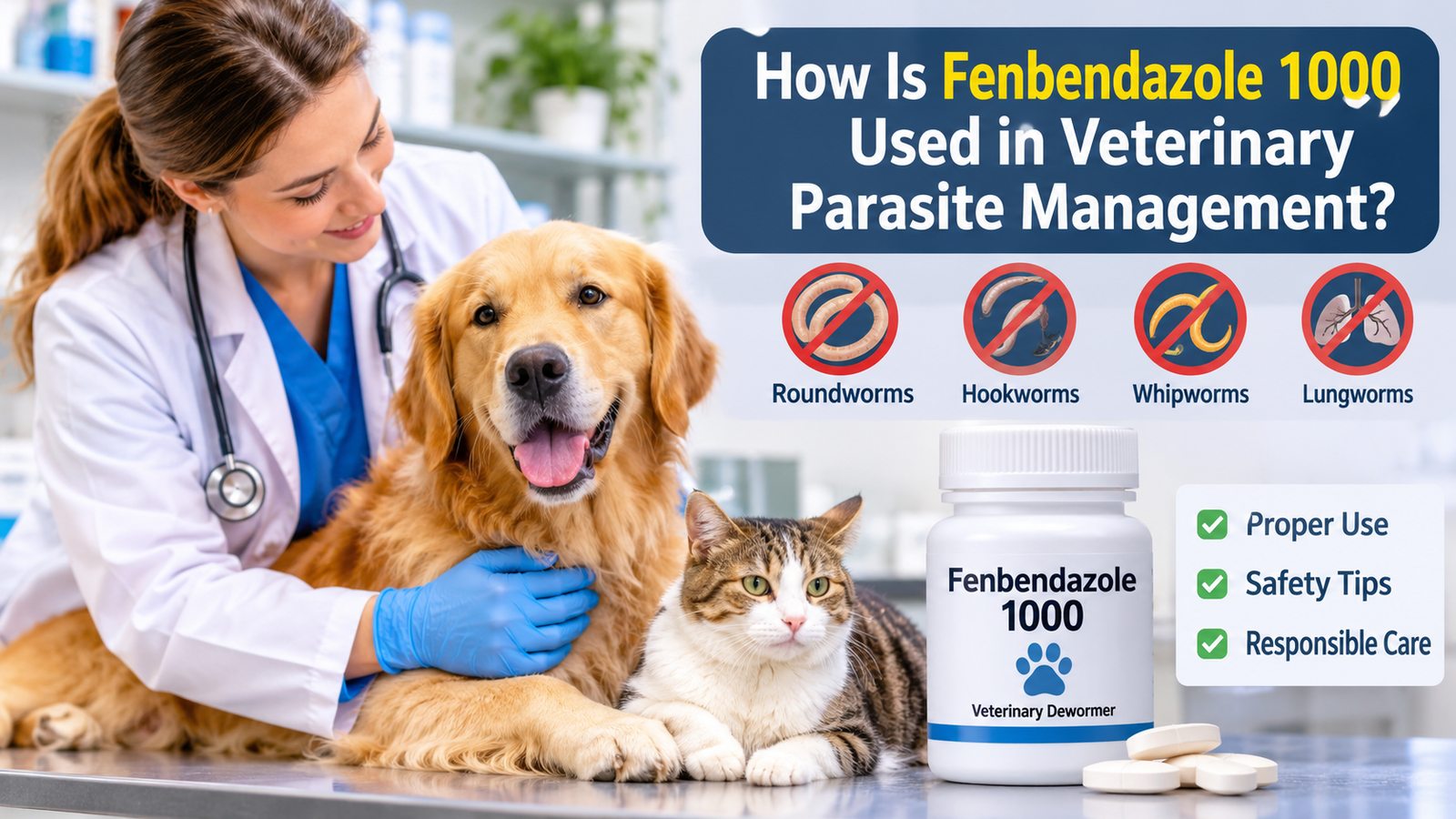
Parasite control is an important part of maintaining animal health, whether animals are household pets or livestock. Internal parasites can affect digestion, nutrient absorption, growth, and overall condition. Veterinarians therefore use different antiparasitic medications depending on the animal species, the parasite involved, and the severity of the infection. One medication frequently discussed in veterinary care is fenbendazole.
Fenbendazole 1000 is a term that animal owners may encounter when researching higher-strength fenbendazole products. Understanding its active ingredient, veterinary applications, and safety considerations can help readers make informed decisions. However, product strength should never be confused with an appropriate treatment dose.
What Is Fenbendazole?
Fenbendazole belongs to a group of antiparasitic medications called benzimidazoles. It is used in veterinary medicine to manage certain gastrointestinal and respiratory worm infections in animals.
The medication works by interfering with the parasite’s ability to use energy and maintain essential cellular structures. More specifically, it affects beta-tubulin, a protein involved in forming microtubules. This disruption can prevent susceptible parasites from functioning normally and eventually lead to their death.
Fenbendazole has veterinary applications in several animal species, including dogs, cats, cattle, and horses. Nevertheless, approved uses differ between products and species. A formulation approved for one animal should not automatically be considered suitable for another.
What Does Fenbendazole 1000 Mean?
The number 1000 generally refers to the stated amount of active ingredient in a particular product, commonly expressed in milligrams. It does not automatically describe the amount an animal should receive during treatment.
When researching Fenbendazole 1000, it is important to distinguish between product strength, concentration, and animal-specific dosage. These terms describe different things and should not be used interchangeably.
For example, a product containing 1000 mg of fenbendazole is not necessarily appropriate for every dog, cat, or farm animal. The animal’s weight, species, health condition, parasite type, and product formulation all influence veterinary treatment decisions.
Before selecting Fenbendazole 1000, owners should check the active ingredient, concentration, formulation, intended animal species, and manufacturer’s instructions. A veterinarian can establish whether the particular product is appropriate.
How Is Fenbendazole 1000 Used in Veterinary Parasite Management?
Fenbendazole is used in veterinary medicine to manage certain susceptible parasitic worm infections. The relevance of Fenbendazole 1000 depends on the particular formulation and its approved veterinary indications.
Management of Roundworm Infections
Roundworms are common internal parasites in dogs and other animals. Depending on the species, an infection may contribute to digestive problems, poor growth, abdominal discomfort, and nutritional difficulties.
Certain fenbendazole formulations are used against susceptible roundworm species. However, accurate identification and an appropriate treatment plan remain important because not every parasite responds to the same medication.
When considering Fenbendazole 1000, owners should confirm that the product is labelled for the animal and parasite involved rather than assuming that a higher strength covers every type of infection.
Control of Hookworm Infections
Hookworms attach to the intestinal lining and can cause blood loss and digestive disturbances. Heavy infections may contribute to anaemia, weakness, and poor general condition.
Certain veterinary fenbendazole products are approved for specific hookworm infections in dogs. A veterinary professional can determine whether the medication is suitable and whether additional care is necessary.
Management of Whipworms
Whipworms live in the large intestine and can cause diarrhoea, weight loss, and other digestive symptoms. Some infected animals show few obvious signs, making diagnostic testing particularly useful.
Fenbendazole is one of the medications used against certain whipworm infections in dogs. Treatment should follow the relevant veterinary product instructions, not assumptions based on the number printed on the packaging.
Treatment of Certain Livestock Worm Infections
Parasite management is also essential in cattle and other farm animals. Gastrointestinal worms and lungworms can affect feeding efficiency, weight gain, and general productivity.
Some fenbendazole formulations are specifically labelled for controlling susceptible stomach worms, intestinal worms, and lungworms in cattle. The approved indications vary according to the formulation and animal category.
Farm owners researching Fenbendazole 1000 should pay particular attention to livestock-specific labelling, veterinary recommendations, and withdrawal periods for meat and milk.
Management of Certain Horse Parasites
Horses can develop infections involving strongyles, pinworms, and other internal parasites. Veterinary professionals may consider specific fenbendazole formulations when managing susceptible worm species.
A horse’s parasite management programme should consider veterinary examinations, faecal testing, previous treatment history, and local parasite resistance patterns. Not every horse requires the same medication or treatment schedule.
Why Is Veterinary Guidance Important?
Although fenbendazole has established veterinary applications, using it without professional guidance can create unnecessary risks.
First, different parasites require different treatment approaches. A product suitable for one infection may not be effective against another. Second, the animal’s weight and species influence medication decisions. Third, repeated or extended treatment should never be assumed safe simply because a medication is commonly used in veterinary practice.
The US Food and Drug Administration has warned veterinarians about reports of bone marrow suppression and pancytopenia in dogs receiving fenbendazole for longer than the labelled treatment duration. This highlights why extending treatment without veterinary supervision is not advisable.
These considerations are especially important when researching Fenbendazole 1000 because a higher product strength does not remove the need for an appropriate veterinary assessment.
What Are the Possible Side Effects?
Like other veterinary medications, fenbendazole may cause unwanted reactions in some animals. Reported effects can include digestive disturbances such as vomiting, reduced appetite, or diarrhoea.
The possibility of adverse reactions depends on the animal, the product, the treatment circumstances, and other medications being used.
Owners should monitor animals during treatment and contact a veterinarian if they notice unusual behaviour, persistent digestive symptoms, weakness, or other concerning changes.
Anyone considering Fenbendazole 1000 should also review the product-specific safety information. Food-producing animals require additional attention to withdrawal periods to ensure that meat and milk are handled according to applicable food-safety requirements.
Does a Higher Strength Mean Better Results?
A higher product strength does not automatically mean better parasite control. This is one of the most important points to understand when researching Fenbendazole 1000.
Effective veterinary treatment depends on selecting the right medication for the identified parasite and administering it according to approved instructions. Increasing the amount without a clinical reason may increase the risk of adverse effects without improving the outcome.
Product strength, concentration, and animal-specific dosage are separate concepts. Reading the label carefully and consulting a veterinary professional are essential steps before treatment.
Is Fenbendazole Intended for Human Use?
Fenbendazole is a veterinary antiparasitic medication, not an approved human treatment. Online discussions sometimes make claims about its possible applications beyond animal parasite management, including cancer treatment. These claims should not be confused with established clinical evidence.
Online discussions have raised questions about fenbendazole and cancer research. To understand what current studies actually suggest, read our article on “Can Fenbendazole Treat Cancer?” However, fenbendazole is a veterinary medication and should not replace approved cancer treatments or professional medical advice.
Anyone with a health concern should consult a qualified healthcare professional and rely on treatments supported by appropriate clinical evidence.
What Should Animal Owners Check Before Choosing a Product?
Before purchasing a veterinary deworming product, owners should consider more than the strength printed on the packaging.
Check the active ingredient and concentration, confirm that the formulation is intended for the relevant animal species, and review the approved parasite indications. Also examine the manufacturer’s instructions, storage requirements, expiry date, and any applicable withdrawal periods.
When comparing Fenbendazole 1000 products, buyers should pay attention to product labelling and manufacturing information rather than relying entirely on promotional descriptions. Purchasing from a reliable source is another important consideration.
When a parasite infection is suspected, a veterinary examination and appropriate diagnostic testing can help prevent unnecessary treatment and improve parasite management decisions.
Final Thoughts
Fenbendazole has an established place in veterinary parasite management, particularly for certain susceptible worm infections in animals. Understanding its mechanism, approved applications, product strength, and safety considerations helps explain why it remains a relevant subject in veterinary discussions.
Fenbendazole 1000 should not be viewed as a universal treatment option or a recommended dose for every animal. The correct product and treatment plan depend on species, body weight, parasite identification, and veterinary instructions.
Responsible parasite management is not simply about selecting a product with a higher number on its packaging. It is about choosing an appropriate treatment, following professional guidance, and prioritising the animal’s long-term health.
For More Information Visit Here: Safegenericlife