
Balancing the resource-heavy demands of organic social media with the financial requirements of paid advertising is a common challenge for growth-oriented brands. Choosing between the two isn’t about finding a singular “winner”; it is about understanding how each mechanism impacts different stages of your customer lifecycle. A cohesive strategy often requires both to maximize visibility and long-term brand equity.
The Long-Term Value of Organic Presence
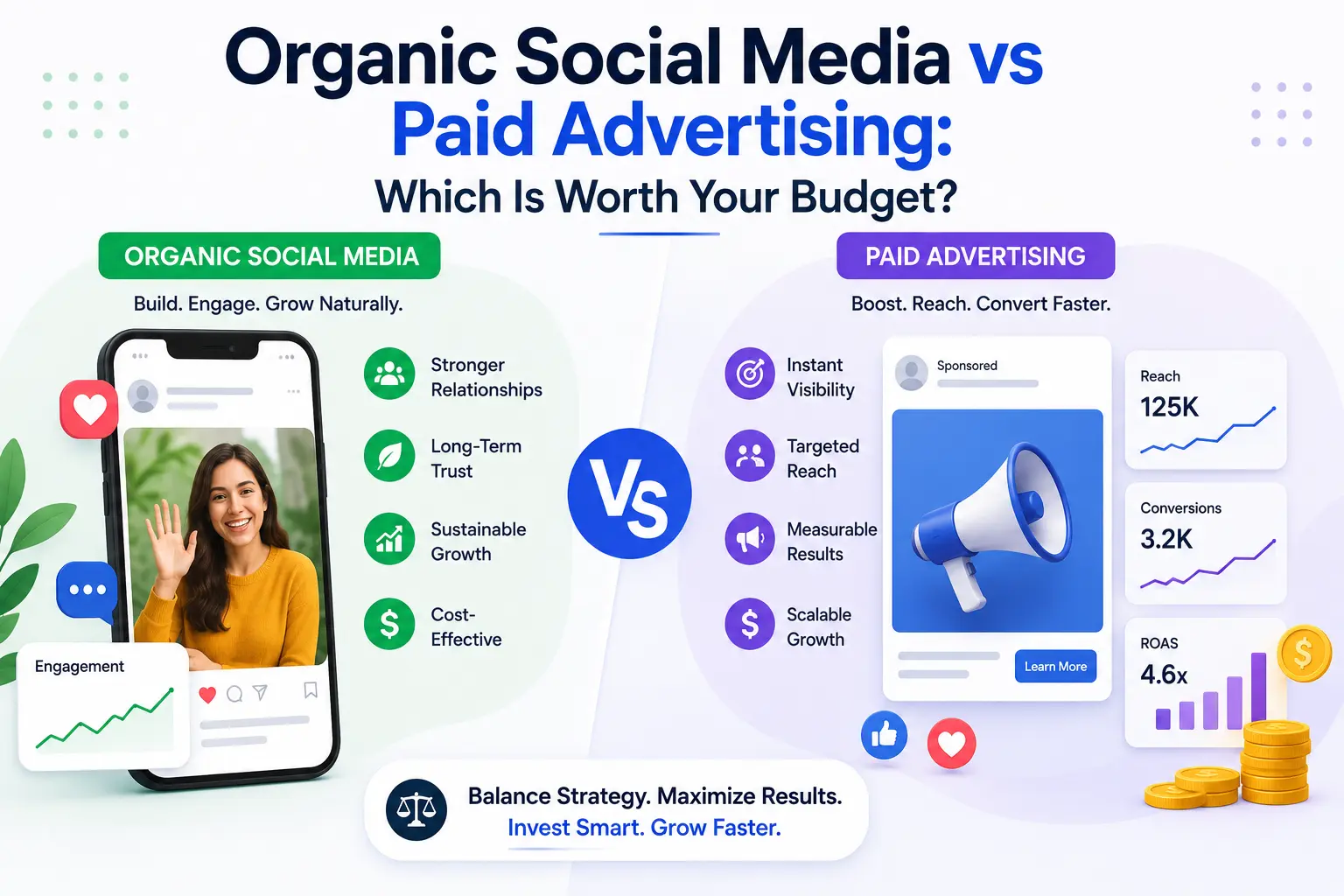
Organic social media serves as the heart of your brand’s personality. While it does not offer the instant traffic spikes associated with paid campaigns, it is essential for building a community and nurturing trust. Consistency here signals to both your audience and search algorithms that your brand is a stable, active entity.
-
Trust Building: Organic content allows you to showcase the human side of your business, which is critical for creating deep, long-term customer relationships.
-
Customer Feedback Loop: Social channels provide a direct line to your audience, offering real-time insights into their needs, complaints, and preferences.
-
Content Testing Ground: Use organic posts to see which messaging, formats, or visual styles resonate most effectively before committing significant budget to paid promotion.
-
Brand Loyalty: A well-managed organic community serves as a support network that keeps existing customers engaged and encourages repeat business through authentic advocacy.
Precision and Speed of Paid Advertising
Paid advertising acts as a lever for immediate growth. It allows you to bypass algorithmic filters and place your message exactly in front of the demographics, interests, and behaviors that matter most to your sales goals. This approach is superior for scaling quickly or launching time-sensitive offers.
-
Audience Targeting: Paid tools offer sophisticated filtering, enabling you to reach high-intent prospects who match your specific customer profile perfectly.
-
Scalable Predictability: When your unit economics are sound, paid ads provide a predictable return, allowing you to scale up or down based on your capacity.
-
Rapid Market Entry: If you are a new brand or entering a new market, paid campaigns provide the initial visibility required to gain traction quickly.
-
Data-Backed Insights: Advert platforms deliver deep, granular data on click-through rates and conversion pathways, helping you refine your value proposition based on hard performance numbers.
Integrating Strategies for Maximum ROI
The most effective approach is to treat organic and paid as two sides of the same coin. Use your organic channels to develop the “voice” and “proof” of your brand, and then amplify your best-performing organic insights using paid budgets. For example, a video that earns high organic engagement is the perfect candidate for paid promotion to broader, cold audiences. By letting organic performance dictate your paid spend, you ensure that you are only putting money behind content that is already proven to work. This synergy lowers your customer acquisition costs and ensures your paid efforts feel authentic and aligned with your brand identity.
Achieving Sustainable Growth
Successfully navigating this balance requires moving away from the idea that social media is a free marketing source or that ads are just an expense. View organic content as a long-term investment in your brand’s reputation and paid ads as an investment in rapid, tactical expansion. By intentionally aligning both, you build a marketing engine that is both resilient during market shifts and capable of hitting aggressive revenue targets.
Frequently Asked Questions
Can I rely only on organic social media for growth? Organic growth is powerful for building trust, but it is often too slow for aggressive scaling. You will eventually hit a ceiling without the reach that paid advertising provides.
What is the biggest mistake brands make with paid ads? The biggest mistake is ignoring the creative. Even with perfect targeting, poor content will lead to high costs and low conversion rates. Test your creative organically first.
When should I shift budget from organic to paid? Shift to paid when you have a clear, proven sales funnel. Once you know a specific offer converts, use paid advertising to push as much traffic as possible into that funnel.
How do I measure the success of organic social media? Focus on engagement metrics like shares, saves, and community sentiment, rather than just likes or follower counts. These signals indicate true brand impact and loyalty.
Is paid advertising too expensive for small businesses? Not necessarily. Paid advertising is scalable. You can start with a very small budget to test specific audiences and increase spend only when you see a positive return.