

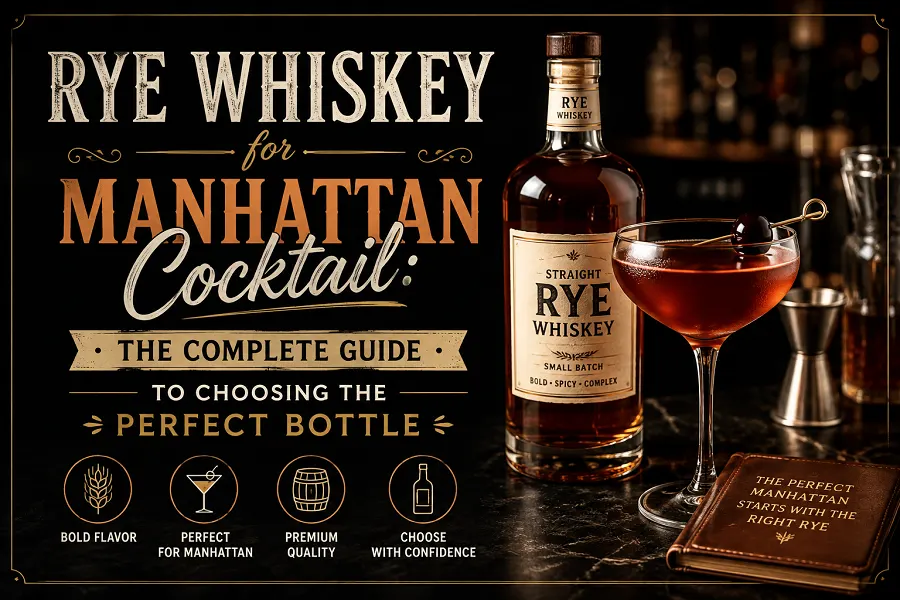
Why the Whiskey You Pick Actually Changes the Drink
I ruined my first Manhattan with a bottle of bourbon I had lying around. It tasted fine — sweet, a little vanilla-forward — but it wasn’t a Manhattan. It was closer to an Old Fashioned with vermouth dumped in. That’s the moment I understood something most recipe cards don’t bother explaining: the whiskey isn’t just an ingredient in this drink, it’s the argument the whole cocktail is built on.
So if you’ve landed here searching for rye whiskey for Manhattan cocktail recipes, here’s the short answer before we get into the weeds — go with a rye that’s at least 90 proof, has a mash bill heavy on rye grain (not just the legal minimum of 51%), and doesn’t lean too sweet on its own. Rittenhouse Rye, Old Overholt, and Sazerac Rye are the three most reliable starting points for home bartenders. If you want something a step up for a dinner party, Wild Turkey 101 Rye or Russell’s Reserve 6 Year hold their own beautifully against sweet vermouth.
Now let’s talk about why, because “just buy this bottle” advice tends to fall apart the first time you’re standing in a liquor store staring at forty options.
Rye or Bourbon — Does It Really Matter?
Short answer: yes, more than people admit.
A Manhattan is whiskey, sweet vermouth, and a couple dashes of bitters, usually Angostura. That’s it. Three ingredients, which means each one is doing a lot of work. Bourbon is sweeter and rounder by nature — corn-forward mash bills push toward caramel and vanilla. Add sweet vermouth on top of that, and you often end up with a drink that tastes flat, almost syrupy, especially once it warms up a bit in the glass.
Rye whiskey pushes back. It’s spicier, drier, a little more aggressive on the finish. When you stir it with vermouth, you get contrast instead of agreement — the drink stays balanced instead of collapsing into sweetness. That’s really the whole case for best rye whiskey for Manhattan cocktail searches outranking bourbon Manhattan searches among serious drinkers: rye was the original spec anyway. The Manhattan predates modern bourbon-heavy trends by a good stretch, and rye was the default in the 1880s New York bars where the drink supposedly started.
That said — and I’ll say this once clearly because too many guides won’t — a bourbon Manhattan isn’t wrong. It’s just a different drink wearing the same name. If you genuinely prefer sweeter cocktails, nobody’s taking your bourbon away.
What to Actually Look for on the Label
Forget brand loyalty for a second. Three things matter more than the name on the bottle.
Proof. Anything under 90 proof tends to get lost once vermouth and dilution from stirring enter the picture. You want a whiskey that can still be tasted at the end of the glass, not just at the first sip. Higher-proof ryes (100+) hold their spice through the whole drink.
Mash bill. Legally, rye whiskey only needs 51% rye grain. A lot of budget bottles sit right at that line and taste closer to a soft bourbon with a rye label slapped on. Bottles like Rittenhouse and Sazerac run higher, and you can taste the difference — more pepper, more bite, less sugar.
Age. This one’s more flexible than people think. A younger rye (2-4 years) can work fine in a Manhattan because the vermouth and bitters fill in some of the complexity an older whiskey would provide on its own. Don’t feel like you need a 10-year bottle for a mixed drink — save that one for sipping neat.
My Actual Bottle Recommendations (Tested, Not Guessed)
I’ve made probably a hundred Manhattans over the last few years testing different rye bottles side by side, mostly because I got tired of bartenders giving vague “just use a good rye” advice without naming anything.
For everyday use — Rittenhouse Rye (100 proof). This is the one I keep stocked at home. It’s affordable, widely available, and built almost specifically for cocktails that need backbone. Straightforward spice, no weird sweetness, and it doesn’t get buried by vermouth.
Budget pick — Old Overholt. Cheaper, a little rougher around the edges, but perfectly serviceable. If you’re making Manhattans for a group and don’t want to spend premium money, this does the job without embarrassing you.
Step-up pick — Sazerac Rye. Slightly more refined, a touch of vanilla underneath the spice, still plenty assertive. This is what I reach for when I actually care about the drink instead of just wanting one.
Splurge pick — Russell’s Reserve 6 Year Rye. More complexity, longer finish, and it holds its shape even in a Manhattan with a generous vermouth pour. Worth it if you’re hosting or gifting.
One honest caveat here — none of these are “wrong” choices, and taste is genuinely personal. A friend of mine swears by WhistlePig for Manhattans because he likes the extra sweetness it brings. I think it edges the drink back toward bourbon territory, but he’s not incorrect, just different.
Vermouth Matters More Than People Admit
Quick tangent, because I see this mistake constantly: people obsess over the rye whiskey for Manhattan cocktail choice and then use vermouth that’s been sitting open in the fridge for eight months. Vermouth is wine-based — it oxidizes. Once opened, it’s good for about a month, maybe six weeks if refrigerated tightly. Old vermouth tastes flat and slightly sour, and it will drag down even the best rye you own. Carpano Antica or Dolin Rouge are both solid, affordable choices that won’t fight your whiskey.
A Simple Ratio to Start With
Classic spec: 2 parts rye, 1 part sweet vermouth, 2 dashes Angostura bitters, stirred (never shaken) with ice, strained into a chilled glass, garnished with a cherry.
If that feels too sweet with your chosen rye, push it to 2.5:1. If it feels thin, drop to 1.5:1 vermouth. There’s no rulebook police here — adjust to your palate and your specific bottle, since ryes vary enough in intensity that a fixed ratio doesn’t always translate cleanly across brands.
Where People Usually Go Wrong
Not stirring long enough is probably the most common mistake — you need 20 to 30 seconds to get proper dilution and chill. Under-stirred Manhattans taste boozy and sharp instead of rounded. The second mistake is using a whiskey that’s too low-proof, which just gets steamrolled by the vermouth. And the third, honestly, is overthinking the cherry. A good maraschino cherry (Luxardo, if you want to spend a bit more) is nice, but it’s not going to save a poorly balanced drink.
FAQs
1. What is the best rye whiskey for Manhattan cocktail on a budget?
Old Overholt and Rittenhouse Rye are both under $30 in most markets and hold up well in a stirred cocktail.
2. Can I use bourbon instead of rye in a Manhattan?
, it’s a common variation, but it produces a sweeter, softer drink rather than the classic spicier profile.
3. Does the proof of the rye whiskey really matter for a Manhattan?
Yes — whiskey below 90 proof tends to get diluted out by the vermouth and ice, leaving a flatter-tasting drink.
4. Is Rittenhouse Rye good for a Manhattan?
It’s one of the most commonly recommended bottles for exactly this reason — 100 proof, high rye content, affordable.
5. How much vermouth should I use with rye whiskey in a Manhattan?
The classic ratio is 2:1 (whiskey to vermouth), though many people prefer 2.5:1 for a drier drink.
6. What’s the difference between rye whiskey and bourbon for cocktails?
Rye is spicier and drier due to its grain content; bourbon is sweeter and rounder from its higher corn content.
7. Should I refrigerate sweet vermouth after opening?
Yes, always. It oxidizes like wine and should be used within about a month of opening.
8. Can I make a Manhattan with a cheap rye whiskey?
You can, but the drink will taste noticeably harsher and less balanced compared to a mid-range bottle.
9. What garnish is traditional for a Manhattan?
A single maraschino or Luxardo cherry, sometimes with a small amount of the cherry syrup added.
10. How long should I stir a Manhattan?
Around 20 to 30 seconds with ice, until the outside of the mixing glass feels properly cold.
11. Is Sazerac Rye better than Rittenhouse for a Manhattan?
Both work well; Sazerac is slightly smoother, while Rittenhouse has a bit more raw spice and bite.
12. What percentage of rye grain makes the best whiskey for a Manhattan?
Look for mash bills above the 51% legal minimum — anywhere from 65% to 95% rye tends to give better cocktail structure.
13. Can I use a high-end rye whiskey in a Manhattan, or is that wasteful?
It’s not wasteful if you enjoy it, but many bartenders save very high-end bottles for sipping neat and use mid-range ryes for cocktails.
14. What bitters go best with rye whiskey in a Manhattan?
Angostura is the classic choice; some people add a dash of orange bitters for extra complexity.
15. Why does my Manhattan taste too sweet even with rye whiskey?
This usually means either your vermouth ratio is too high, your rye is on the lower-proof or sweeter side, or your vermouth is fresh and vibrant enough to dominate — try dialing back to a 2.5:1 or 3:1 ratio.