

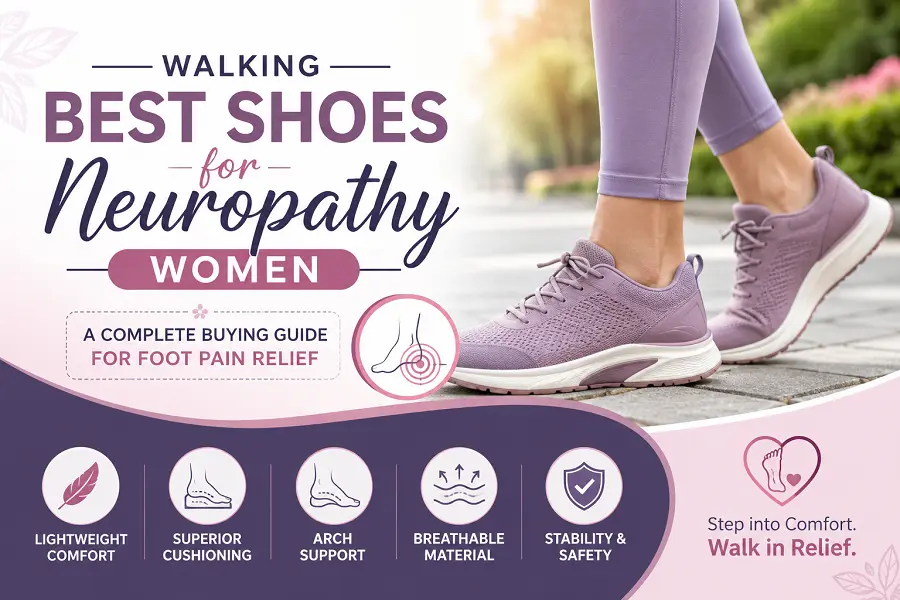
If your feet burn, tingle, or go numb by the time you’ve walked to your mailbox, you already know that “just wear comfortable sneakers” isn’t real advice. Neuropathy doesn’t care about brand names or cute colorways — it cares about pressure points, seam placement, and whether your shoe is fighting your foot or working with it.
I’ve spent a lot of time talking to people (mostly women in their 50s and 60s, plus a fair number of men managing diabetic neuropathy) about what actually changes their day-to-day pain. The short answer: the right shoe won’t cure neuropathy, but it can be the difference between a walk around the block and staying on the couch. Let’s get into what “right” actually means.
What Are the Best Shoes for Neuropathy, Really?
Here’s the direct answer, since you probably didn’t come here for a life story: the best shoes for neuropathy have a wide, deep toe box, zero or minimal internal seams, a firm but cushioned sole, and a secure closure (laces or velcro) that lets you adjust fit as swelling changes throughout the day. That’s it. Everything else — brand, style, price — is secondary to those four things.
Where people go wrong is buying shoes based on how “supportive” they look on a shelf. A shoe can look orthopedic and still have a seam sitting directly over a sensitive nerve area. You genuinely have to try them on, walk in them for a few minutes, and pay attention to any specific pressure — not just general comfort.
Why Regular Sneakers Often Fail
Most mainstream sneakers are built for a “normal” foot with normal sensation. They taper at the toe for a sleeker look, use thin fabric where there should be padding, and often have a seam right across the ball of the foot. For someone with healthy nerves, none of that registers. For someone with neuropathy, it can feel like walking on hot coals or, on numb days, cause blisters and pressure sores you don’t even notice forming — which is its own danger, especially for diabetics.
Best Shoes for Neuropathy in Feet: What to Look For
Let’s break this down into the features that actually matter, rather than a generic checklist.
Toe box width and depth. Your toes need room to sit flat and spread slightly. If you can pinch fabric at the tip of your shoe with your foot inside, that’s a decent sign there’s room. Narrow, pointed styles are basically off the table here.
Seamless or minimal-seam interior. This is the one most people overlook. Run your fingers along the inside of the shoe before buying. Any raised seam near the ball of the foot or heel is a future problem.
Cushioned, non-flexible sole. You want shock absorption, but not a sole so flexible it lets your foot twist unpredictably. A slightly stiffer sole with good cushioning protects against sharp objects and uneven ground you might not feel.
Adjustable closure. Neuropathy-related swelling isn’t constant — it can be worse in the evening or after standing all day. Laces or velcro straps let you loosen or tighten as needed. Slip-ons are convenient but offer no flexibility here.
Removable insoles. If your doctor has prescribed custom orthotics (common for diabetic neuropathy), you need a shoe that can accommodate them without cramming your foot.
Best Shoes for Neuropathy Women: A Few Category Picks
Rather than naming specific models that go out of stock or get redesigned every season, here’s how to shop by category — this holds up better long-term than a “top 10” list that’s outdated in six months.
- Diabetic-certified walking shoes: Look for shoes labeled as therapeutic or diabetic footwear (some brands carry Medicare-approved diabetic shoe lines). These are built specifically around seamless interiors and depth for orthotics.
- Wide-fit athletic sneakers: Many mainstream running brands now offer “wide” and “extra wide” versions of their standard shoes. These can work well if you check the interior seam placement carefully.
- Orthopedic walking shoes: Brands that specialize in podiatrist-recommended footwear tend to prioritize structure over style, which is exactly the trade-off you want here.
- Adjustable sandals with arch support (warm weather): Not ideal for long walks, but for around-the-house wear, a supportive sandal with adjustable straps beats going barefoot, which is genuinely risky for anyone with reduced foot sensation.
Best Shoes for Neuropathy for Men and Diabetics With Neuropathy
The core requirements don’t really change between men’s and women’s shoes — width, seams, cushioning, closure — but sizing and width options tend to be more limited in men’s lines, oddly enough. If you’re shopping for a man with diabetic neuropathy, look specifically for shoes marketed as diabetic footwear, since these often come in wider width options (2E, 4E, and beyond) that standard men’s sneakers don’t offer.
One practical note for diabetics specifically: fit matters more than comfort claims. A shoe that “feels fine” in the store can still cause a pressure sore over weeks of wear if there’s a seam or tight spot you can’t feel. If you or someone you’re shopping for has diabetic neuropathy, a proper shoe fitting — ideally with a podiatrist or certified pedorthist — is worth the appointment. It’s not overkill; it’s basic prevention.
A Quick Reality Check (Because Not Every Shoe Works for Every Foot)
I want to be upfront about something: no shoe fixes neuropathy pain completely, and results vary a lot from person to person. Some people find dramatic relief switching to a seamless, wide shoe. Others still deal with baseline discomfort no matter what they wear, because the nerve damage itself is the source of pain, not the footwear. Shoes reduce friction, pressure, and injury risk — they’re not a treatment for the underlying condition.
Also worth knowing: “neuropathy shoes” can get expensive fast, and pricier doesn’t always mean better fit for your specific foot shape. I’ve seen people spend $150 on a well-reviewed diabetic shoe that still rubbed wrong, while a $60 wide-fit sneaker from a sporting goods store worked fine. Try things on. Return what doesn’t work. Don’t assume the price tag guarantees comfort.
How to Try Shoes On When You Have Neuropathy
A few practical tips that make a real difference:
- Shop later in the day, when feet are naturally more swollen — this gives you a truer sense of fit.
- Wear the socks you’d actually wear with the shoes, including any diabetic or compression socks.
- Walk around the store for several minutes, not just a few steps.
- Check both feet — many people have one foot slightly larger, and neuropathy can affect feet unevenly.
- If you can’t feel discomfort reliably, ask someone to check for tight spots or redness after wearing them for 20–30 minutes.
Final Thoughts
Buying shoes for neuropathy takes more patience than a regular shopping trip, and that’s honestly fine — you’re not being fussy, you’re being careful with feet that can’t always warn you when something’s wrong. Focus on width, seams, cushioning, and adjustability over brand names or styling, and don’t be afraid to return shoes that don’t work once you’ve actually walked in them for a while.
If foot pain, numbness, or wounds are getting worse regardless of footwear, that’s a conversation for a podiatrist, not just a shopping decision.
Frequently Asked Questions
1. What are the best shoes for neuropathy?
Shoes with a wide, deep toe box, minimal internal seams, firm cushioned soles, and adjustable closures like laces or velcro tend to work best for most people with neuropathy.
2. What are the best shoes for foot neuropathy specifically?
Look for the same core features — seamless interior, wide toe box, good cushioning — but also consider shoes with removable insoles if you use custom orthotics.
3. What are the best shoes for men with neuropathy?
Diabetic-certified footwear lines usually offer the widest range of sizes for men, including extra-wide options that standard sneakers don’t carry.
4. Are diabetic shoes different from regular neuropathy shoes?
Diabetic shoes are often built to a stricter standard — deeper toe boxes, fully seamless interiors — since diabetic neuropathy carries a higher risk of unnoticed wounds and ulcers.
5. Can compression socks be worn with neuropathy shoes?
Yes, and many people do. Just try shoes on while wearing the same socks you’ll actually use, since compression socks add bulk.
6. Do neuropathy shoes need to be a specific brand?
No. Brand matters less than fit and construction. A lesser-known wide-fit shoe with no interior seams can outperform an expensive “orthopedic” brand that doesn’t fit your foot shape.
7. How often should neuropathy shoes be replaced?
Most walking shoes lose meaningful cushioning after 300–500 miles or roughly 6–12 months of regular wear, sooner if you notice the sole compressing unevenly.
8. Are sandals ever okay for neuropathy?
Supportive, adjustable sandals with good arch support can work for short, low-risk wear, but they don’t protect the foot as well as a closed shoe for walking or being outdoors.
9. What’s the ideal toe box shape for neuropathy shoes?
A rounded or square toe box that lets toes lie flat and spread naturally, rather than a tapered or pointed shape.
10. Do neuropathy shoes help with diabetic foot ulcers?
They can help prevent new pressure points and friction that lead to ulcers, but they don’t treat existing wounds — that requires medical care.
11. Should I get fitted by a professional for neuropathy shoes?
It’s a good idea, especially for diabetics, since reduced sensation makes it hard to notice a poor fit before damage happens.
12. Are wide-width sneakers the same as neuropathy shoes?
Not always. A wide sneaker helps with toe room, but it may still have interior seams or a flexible sole that isn’t ideal — check construction, not just width.
13. What socks pair best with neuropathy shoes?
Seamless, moisture-wicking socks, often diabetic-specific socks with no elastic band that could restrict circulation.
14. Can neuropathy shoes reduce foot pain entirely?
not entirely — they reduce friction and pressure-related pain, but nerve pain from the condition itself often needs separate medical management.
15. Are expensive neuropathy shoes always better?
No. Fit and construction matter far more than price. Some affordable wide-fit shoes work as well as, or better than, premium “neuropathy-branded” options.