

Two jigsaws can have the same number of pieces and feel completely different after you empty the box. A bright illustration full of signs and borders offers clues almost immediately. A seascape with a broad gray sky may leave you comparing piece shapes before you have even assembled a quarter of the image. If you search for puzzles 200 pieces, you may find collections that span a range rather than an exact count. Confirm the count for the individual design and then look at how the picture, cut, and finished dimensions affect the solving experience. Premium Craft
Try the Thumbnail Test
Shrink the picture or stand far enough away from the box that the details blur. See how many blocks of color you can still distinguish. A yellow storefront beside a red awning and a blue street sign gives you several places to start. A field of small flowers may look more colorful at first glance, yet a close look might show the same three colors repeating over most of the design. Think about whether identifiable features are spread across the whole puzzle or clustered in one corner.
Then find the largest area that looks almost uniform. A dark border, bright sky, or wide expanse of water may contain a lot of the pieces. Look for specific details within that area, such as a change in brush direction, a thin cloud, or the edge of a reflection. Those details become useful during sorting. If a large portion of the image has very few landmarks, a solver who enjoys matching subtle shapes may find it engaging. Someone who likes steady visual progress may prefer an image divided into several distinct areas.
Look at the Cut and Shape of the Pieces
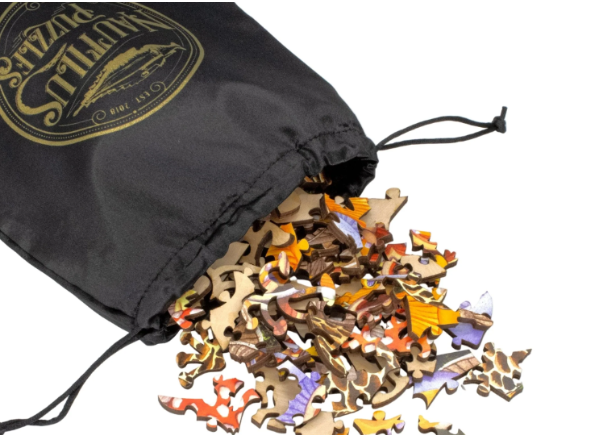
Search results for puzzles 200 pieces can include rectangular designs, irregular outlines, and puzzles with recognizable figures cut into individual pieces. The linked catalog lists shaped and figural styles and distinguishes larger easy-grip pieces from other options. Check the description of the individual puzzle. An irregular outline changes how useful a traditional edge sort will be. Figural pieces can be fun to identify early even when their location in the image remains unclear.
Piece count also gives you little information about physical size. Look for the finished dimensions and, if published, the approximate piece size. A panoramic image might fit across a wide table while leaving too little room for several sorting trays. A compact design can leave plenty of room around the border but have smaller pieces that require closer handling. If you plan to pause halfway through, check whether the work surface can be moved or whether the puzzle will have to share space with another activity.
Pick a Sorting Method That Fits the Picture
Start by spreading the pieces face up and looking for the most distinctive visual clue. In a street scene, that might be lettering or the straight lines of a window. In a landscape, it could be the horizon rather than the outer edge. Group the obvious pieces first, then put ambiguous pieces aside until a section grows around them. A small tray for uncertain pieces makes it easy to free table space while keeping them visible.
For puzzles 200 pieces with repetitive areas, sorting by the shape of tabs and blanks can be useful later in the solve. First build a section that provides several open spaces for comparison. When a candidate piece seems close, examine the printed detail around the joint and make sure the piece seats easily. If several people are solving together, leave the reference picture where everyone can see it and give each person a distinct part of the image to work on. Compare the sections periodically to see whether any meet.
Conclusion
The collection at Nautilus Puzzles provides examples of how piece count, artwork, and cut can vary independently. Use the individual listing to check the count and dimensions, then consider how much of the image you could sort by sight. A jigsaw with the right kind of difficulty can make good use of a small table and the time you have available.