
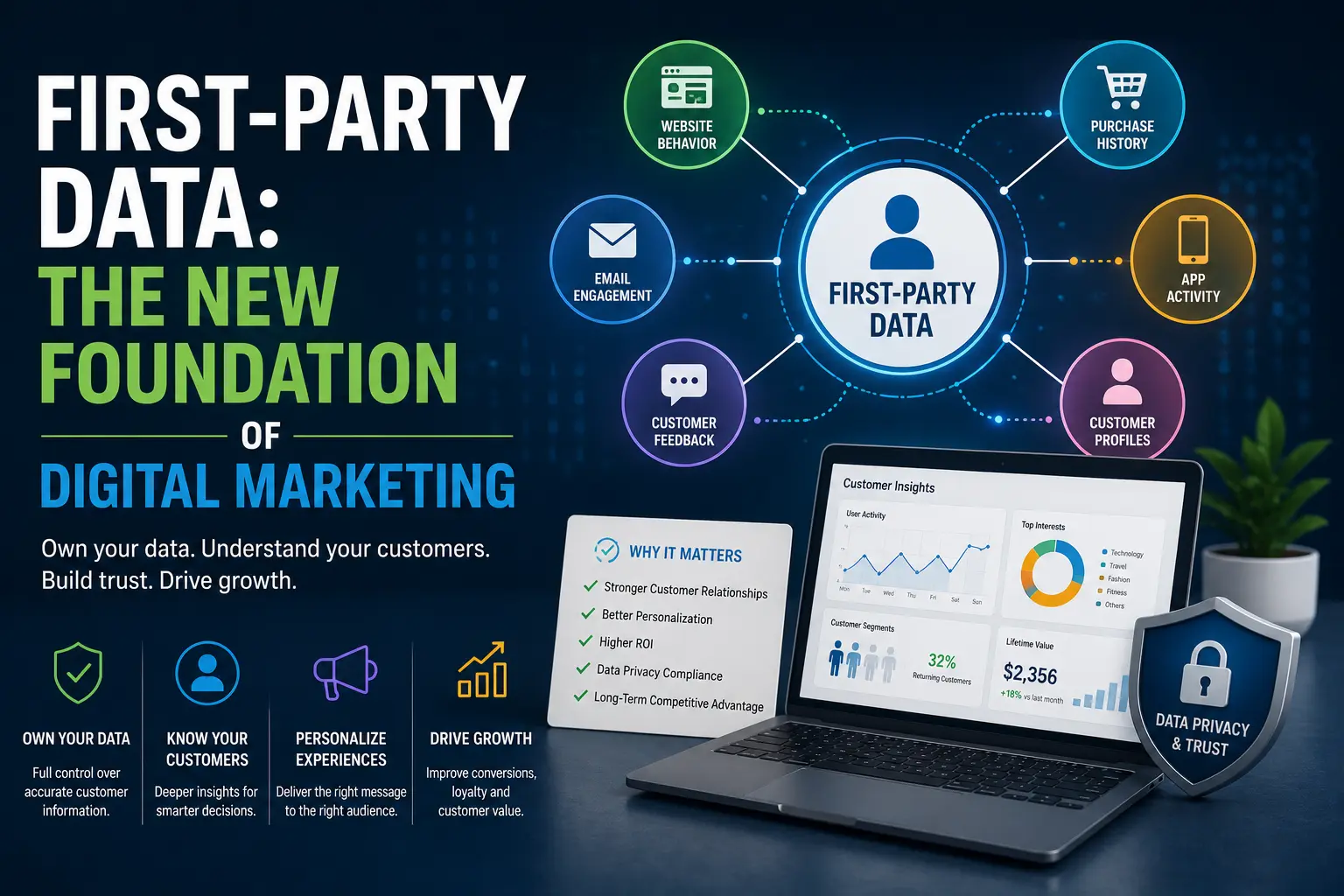
The digital marketing landscape has undergone a permanent shift. With the deprecation of third-party cookies reaching a critical turning point in 2026, the reliance on external tracking networks has effectively collapsed. Brands can no longer depend on rented audiences or invisible cross-site surveillance to fuel their growth. Instead, success now belongs to organizations that prioritize first-party data—information collected directly from customers through transparent, consensual interactions.
Moving Beyond Behavioral Tracking
The transition away from third-party cookies forces a fundamental change in how companies engage with their prospects. Rather than tracking users across the entire web, marketers are now focusing on deepening their understanding of the users already within their own ecosystem. This shift prioritizes quality over sheer volume, as data captured from a direct relationship is inherently more accurate, privacy-compliant, and actionable.
-
Trust-Based Value Exchange: Customers are increasingly willing to share information when they understand the specific benefit, such as personalized recommendations or exclusive content.
-
Precision in Personalization: With a direct data set, marketers can tailor messaging based on actual purchase history and stated preferences rather than inferred guesses.
-
Reduced Acquisition Costs: By leveraging known customer insights to nurture leads, companies can improve conversion rates without overspending on broad, untargeted campaigns.
-
Compliance and Brand Safety: Operating on a first-party model naturally aligns with evolving global privacy regulations, mitigating the legal risks associated with unauthorized tracking.
Operational Pillars for a First-Party Strategy
Shifting to a first-party framework is not just a technical update; it is an organizational transformation. To effectively leverage this asset, teams must unify their data sources to create a coherent picture of the customer journey.
-
Consolidate Customer Signals: Integrate data from CRM systems, email platforms, website interactions, and loyalty programs into a single source of truth.
-
Implement Transparent Consent: Establish clear, simple, and honest consent management interfaces that give users genuine control over their data preferences.
-
Optimize Content for Lead Generation: Develop high-value assets—such as interactive tools or newsletters—that naturally encourage users to voluntarily provide their details.
-
Activate Data with AI: Use machine learning models to analyze your internal data sets to predict churn, identify high-value segments, and automate personalized marketing touchpoints.
Turning Data into Lasting Relationships
The true power of first-party data lies in its ability to foster genuine human connections. When a brand knows its audience through direct engagement, it stops treating them as anonymous traffic and begins treating them as valued partners. This pivot toward relationship-driven marketing results in higher retention and long-term brand equity. By focusing on the “why” behind customer actions—derived from direct, consented insights—businesses can craft campaigns that resonate deeply, fostering a cycle of loyalty that no algorithm or third-party tracking network could ever replicate.
Frequently Asked Questions
Why is first-party data more reliable than third-party data?
It is collected directly from your actual customers, meaning it is more accurate, relevant, and free from the decay and inaccuracy often found in third-party data sets.
Does moving to first-party data mean I have to stop running ads?
Not at all. You can still use advertising, but your targeting will be driven by your own customer insights (such as customer lists or lookalike audiences) rather than rented behavioral profiles.
How do I encourage users to share their data?
The most effective way is to offer clear, immediate value, such as personalized shopping experiences, exclusive discounts, or helpful educational resources.
What is the biggest risk of ignoring this shift?
The primary risk is the loss of “addressability”—the ability to effectively reach and measure the impact of your marketing efforts as traditional tracking channels vanish.
Is first-party data enough to sustain marketing growth?
Yes. When combined with contextual advertising and AI-driven predictive modeling, it provides a more robust and sustainable foundation for long-term growth than fragmented third-party signals.