

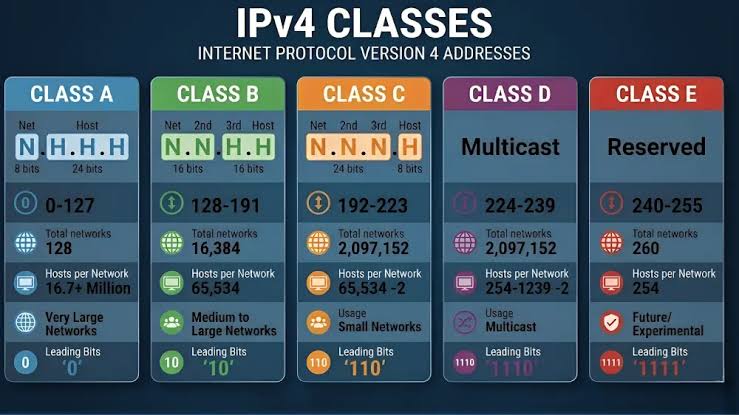
If you have searched for 183.63.127.22, you have probably encountered this address in a server log, website analytics report, firewall alert, or network monitoring tool. At first glance, it looks like nothing more than four numbers separated by periods. In reality, it is an IPv4 address, which is part of the addressing system that allows devices and networks to communicate across the internet.
However, seeing a specific IP address does not automatically tell you who is using it, whether the activity is dangerous, or exactly where the person or device is located. That distinction matters. A sensible investigation focuses on the behavior connected to the address, not simply the numbers themselves. Public information associated with this IP range has linked it with broader network infrastructure, while IP geolocation data should still be treated as approximate rather than definitive.
This guide explains what the address means, what information an IP lookup can reveal, why it may appear in your records, and how to investigate it responsibly.
What Is 183.63.127.22?
The address 183.63.127.22 follows the Internet Protocol version 4 (IPv4) format. An IPv4 address contains four numerical sections, commonly called octets, separated by dots.
Here is the structure:
| Section | Value |
|---|---|
| First octet | 183 |
| Second octet | 63 |
| Third octet | 127 |
| Fourth octet | 22 |
Each octet can contain a number from 0 to 255. Together, these four values create an address used to identify and route network communication.
A simple way to understand an IP address is to compare it with a postal address. When information travels across the internet, routers need enough addressing information to determine where packets should be sent. The IP system provides that essential routing framework.
Is This a Public or Private IP Address?
This address is a public IPv4 address, not a private local-network address.
Private addresses, such as those beginning with 192.168.x.x or 10.x.x.x, are normally used inside homes, offices, and other internal networks. Public addresses can be used for communication across the wider internet.
| Feature | Public IP Address | Private IP Address |
| Accessible across the internet | Generally yes | No, not directly |
| Typical use | External communication | Internal networking |
| Uniqueness | Publicly routable | Can be reused on separate local networks |
| Example | 183.63.127.22 | 192.168.1.1 |
This is one reason an unfamiliar address may appear in website access logs or security records. Its appearance simply means that some network communication involving that address was recorded. It does not, by itself, prove harmful activity.
Why Might You See This Address?
There are several perfectly ordinary reasons why a specific public IP may appear in your systems.
Website Access Logs
Web servers often record the source IP address of incoming requests. A visitor, automated service, or application connecting to your website may therefore leave an entry associated with this address.
Security Monitoring
Firewalls and security platforms collect connection data to help administrators identify unusual behavior. An unfamiliar IP might appear because of repeated requests, login attempts, scanning activity, or entirely normal browsing.
Network Troubleshooting
IT teams regularly examine IP addresses when diagnosing connection failures, routing issues, latency, or service interruptions.
Traffic Analysis
Website owners may review source addresses alongside timestamps, URLs, request methods, and user-agent information to understand how traffic is reaching their systems.
The important point is that an IP address is evidence of a connection, not a complete explanation of that connection.
What Can an IP Lookup Reveal?
Depending on the database and available records, an IP lookup may provide useful technical details, including:
- An estimated country, region, or city
- The network or organization responsible for the address range
- Autonomous System Number (ASN) information
- Internet service provider or network operator details
- Reverse DNS information, when available
- Routing and network-range context
Public information about the surrounding network range has associated the 183.63.127.0/24 block with AS4134, commonly identified as CHINANET-BACKBONE. That information describes network allocation context, but it should not be confused with identifying the individual currently using a specific address.
What an IP Address Cannot Reliably Tell You
People often overestimate what can be learned from a single IP address. On its own, it generally cannot provide:
- A person’s full name
- Their exact home or office address
- A phone number
- Private account information
- A guaranteed real-time location
- Proof that one specific person performed an action
Geolocation is particularly important to interpret carefully. An IP lookup can provide an estimate, but databases may disagree, and VPNs, proxies, mobile networks, shared connections, and dynamic address assignments can further complicate the picture.
So, if one tool reports a city and another reports a broader region, that does not necessarily mean one source is deliberately wrong. IP geolocation is an informed approximation, not a GPS signal.
Is 183.63.127.22 Safe or Dangerous?
The most accurate answer is: the IP address alone is neither automatically safe nor automatically malicious.
A legitimate user, a business network, an automated crawler, or an attacker can all generate traffic from public IP addresses. What matters is the activity pattern.
Potential warning signs may include:
Repeated Failed Login Attempts
A large number of unsuccessful authentication requests in a short period can indicate brute-force activity.
Excessive Requests
Thousands of rapid requests to the same website or API may indicate abusive automation, although some legitimate services can also generate heavy traffic.
Vulnerability Scanning
Requests for unusual files, administrative paths, or known vulnerable endpoints may deserve closer examination.
Suspicious Request Patterns
Unexpected payloads, repeated probing, or activity outside normal user behavior can provide more meaningful evidence than the IP itself.
I once reviewed website logs during a traffic issue and found that the most useful clues came from comparing request patterns and timestamps rather than simply searching each unfamiliar IP address.
That approach is usually more reliable and helps avoid blocking legitimate visitors unnecessarily.
Investigating Suspicious IP Activity
Imagine an online store suddenly receives repeated requests from 183.63.127.22. The store owner immediately considers blocking it.
But what should happen next?
First, the administrator checks which pages are being requested. If the activity consists of normal page views spread over several minutes, it may simply be ordinary browsing. If the same address is requesting a login page hundreds of times per minute, the situation deserves more attention.
The administrator can then review:
- Request frequency
- Requested URLs
- HTTP response codes
- Login failures
- User-agent information
- Security alerts from the same time period
This process creates a far clearer picture than making a decision based on the address alone. That is especially valuable because automated traffic, shared networks, and changing IP assignments can make a simple “block or allow” decision too crude.
How to Investigate an Unknown IP Responsibly
When you encounter an unfamiliar address, follow a practical sequence.
Check Your Own Logs First
Your logs show why the address is relevant to you. Review the timestamp, requested resource, request method, response code, and frequency.
Compare Behavior Over Time
One request may mean nothing. A repeated pattern can be much more informative.
Review Public Network Information
A reputable IP or WHOIS lookup can provide general ownership and routing context.
Check Security Reputation Carefully
Threat-intelligence and reputation services can add useful context. Still, a listing should not automatically become your only basis for action because IP reputation can change and false positives can occur.
Apply the Least Disruptive Response
If the evidence is uncertain, rate-limiting, challenge mechanisms, or additional monitoring may be better than immediately imposing a permanent block.
Should You Block the Address?
You should consider blocking a source address only when your evidence supports that decision.
A temporary or permanent restriction may be appropriate when you observe:
- Confirmed malicious activity
- Repeated brute-force attempts
- Harmful automated requests
- Clear exploitation attempts
- Persistent abuse after other controls fail
On the other hand, blocking may be unnecessary if the activity is normal, isolated, or consistent with legitimate automation.
The goal is not to treat every unfamiliar IP as a threat. The goal is to understand what the connection is actually doing.
Why Understanding IP Addresses Matters
Whether you manage a blog, business website, application, or private network, IP awareness can improve decision-making.
It helps you:
- Understand where connection activity is coming from
- Investigate suspicious patterns
- Troubleshoot network problems
- Improve server monitoring
- Recognize the limits of IP-based identification
- Avoid reacting to incomplete information
An address like 183.63.127.22 may look highly specific, yet the correct interpretation still depends heavily on context. That is the key lesson. The number tells you where to begin investigating—not necessarily what conclusion to reach.
Also Read: AST Hudbillja Odds: Meaning, Context & Explanation
Conclusion
183.63.127.22 is a public IPv4 address that can appear in server logs, network tools, website analytics, and security systems. Like any public IP, it plays a role in directing internet communication, but the address alone cannot reveal a person’s exact identity, precise location, or intentions.
If you encounter it, avoid making an immediate assumption. Examine the surrounding evidence, including request frequency, behavior, timestamps, and security indicators. Public lookup information can provide useful network context, while geolocation should remain an estimate rather than a certainty.
The best response to an unfamiliar IP address is neither panic nor blind trust. It is careful investigation based on behavior.
FAQs
What is 183.63.127.22?
It is a public IPv4 address used within the internet’s addressing and routing system.
Can I find the exact location of this IP address?
No. IP lookup tools can provide an estimated geographic location, but they cannot reliably provide an exact physical address.
Does this IP identify one specific person?
Not necessarily. A public IP may be dynamically assigned, shared, used by network infrastructure, or associated with many users over time.
Is 183.63.127.22 a virus or malware?
No. An IP address is not itself a virus or malware. Any potential risk depends on the activity associated with connections from that address.
Why does this address appear in my website logs?
It may represent a visitor, automated service, crawler, application, or another system that connected to your website.
Should I block 183.63.127.22?
Only if your logs and security evidence show malicious or abusive behavior. Blocking an address solely because it is unfamiliar can accidentally restrict legitimate traffic.
What is the difference between an IPv4 and IPv6 address?
IPv4 uses four numerical sections, such as 183.63.127.22, while IPv6 uses a much longer hexadecimal format and supports a vastly larger number of addresses.