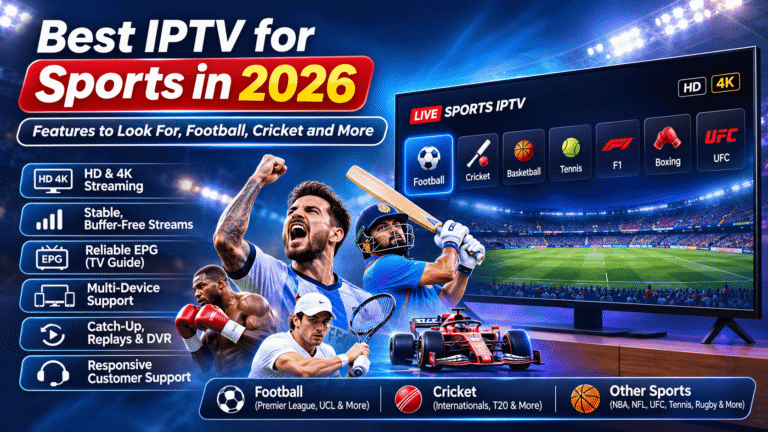

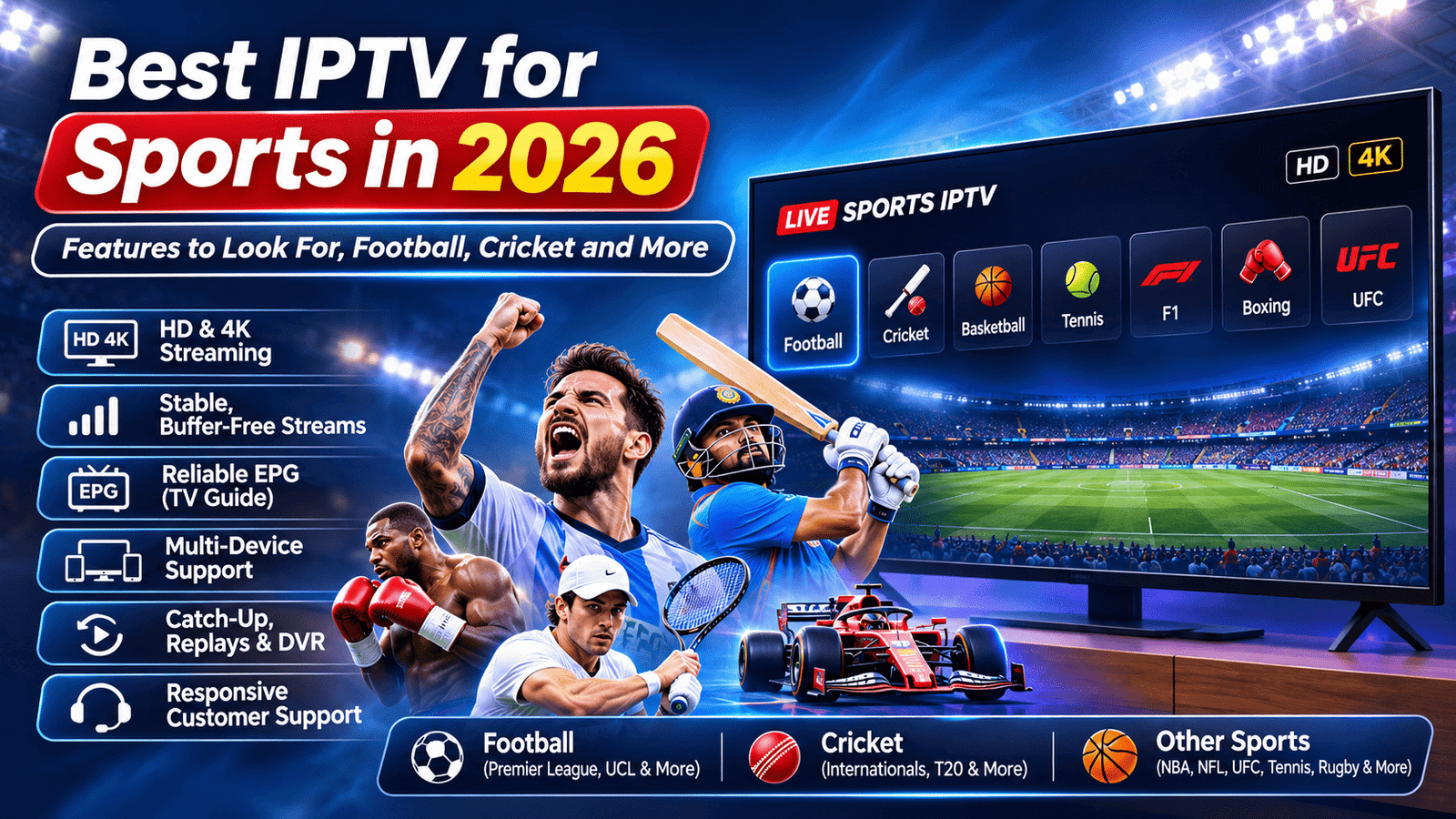
Sports fans have never had more ways to watch, and never more confusion about where. Matches are split across multiple broadcasters, regional blackouts are common, and the cost of stacking subscriptions adds up fast. That’s why more viewers are turning to IPTV for live sports. But not every service is built for match day. Here’s what to look for in 2026, and what to expect for football, cricket, and other major sports.
Why Sports Fans Choose IPTV
IPTV delivers live channels over the internet instead of through cable or satellite. For sports viewers, the appeal is clear:
- One place for many sports: football, cricket, basketball, tennis, rugby, F1, boxing, and more
- Flexibility: watch on a smart TV, phone, tablet, Firestick, or laptop
- Better value: one subscription instead of several broadcaster packages
- Global coverage: channels from different countries, useful for fans following leagues abroad
Key Features to Look For in a Sports IPTV Service
1. Stable, Buffer-Free Streaming
Nothing ruins a last-minute goal or a final-over finish like a frozen screen. Look for providers with strong server infrastructure, anti-freeze technology, and a good reputation for uptime during peak events.
2. HD and 4K Quality
Fast-moving sports need high frame rates and sharp resolution. Look for 1080p as a minimum, with 4K and 50/60 fps streams for major matches where available.
3. Wide Sports Channel Coverage
A good sports package should include:
- Football: Premier League, La Liga, Serie A, Bundesliga, Ligue 1, Champions League, MLS
- Cricket: international series, T20 leagues, Test matches, and ODIs
- Other sports: NBA, NFL, NHL, UFC, boxing, tennis, F1, golf, and rugby
4. Reliable EPG (TV Guide)
An electronic program guide lets you see upcoming fixtures, kickoff times, and replays at a glance. Check that the EPG is accurate and updates regularly.
5. Multi-Device and Multi-Screen Support
Make sure the service works on the devices you own. Common options include Android TV, Fire TV Stick, Apple TV, Samsung and LG smart TVs, and mobile apps. Some services also allow multiple connections, which helps if several people in your home want to watch different matches.
6. Catch-Up, Replays, and DVR
If you miss a match, catch-up or recording features let you watch later without spoilers. These are especially useful across time zones.
7. Responsive Customer Support
Problems tend to appear at the worst moments, like minutes before kickoff. A provider with fast support through live chat, email, or WhatsApp makes a real difference.
8. Transparent Pricing and Trial Options
Avoid services with hidden fees or unclear terms. A short trial or a flexible monthly plan lets you test quality before committing to a long subscription.
9. Legitimate Licensing
Sports rights are strictly protected, and unlicensed services can disappear without warning, leaving you without a refund. Where possible, choose a provider that is transparent about its sources and check what is legal to stream in your country.
Best IPTV Options by Sport
Football
Football fans should prioritize services with wide European league coverage, Champions League and Europa League access, and strong stability during big-kickoff windows when thousands of viewers connect at once. A provider like Xtreme HD IPTV is the kind of service worth testing for football, since match-day performance matters more than channel count alone.
Cricket
Cricket has its own demands. Matches run for hours, and Test cricket can run for days. Look for dedicated cricket channels, reliable coverage of international tours and T20 leagues, and low-latency streams so you aren’t seeing score alerts on your phone before the ball is bowled.
Basketball, Tennis, and Combat Sports
Look for services with US sports channels (NBA, NFL, NHL), tennis Grand Slam coverage, and pay-per-view style events like UFC and boxing. These events often need high bandwidth, so server strength is critical.
Motorsports and Rugby
F1 and rugby fans should check for multi-camera feeds, onboard cameras, and international broadcaster feeds, since coverage varies widely by region.
What Internet Setup Do You Need?
Even the best IPTV service can’t overcome a weak connection. For smooth sports streaming:
- HD streams: at least 15 to 25 Mbps
- 4K streams: 40 Mbps or more
- Connection type: use Ethernet instead of Wi-Fi where possible
- Router: keep it updated and placed close to your streaming device
Quick Checklist Before You Subscribe
- Does it cover the leagues and sports you actually watch?
- Does it offer HD or 4K with stable streams?
- Is there a trial or short plan to test it first?
- Does it support your devices?
- Is there an EPG and replay support?
- Is customer support easy to reach?
- Is the provider transparent about pricing and terms?
Common Mistakes to Avoid
- Choosing by price alone: the cheapest option is often the least stable
- Judging by channel count: thousands of channels mean little if the ones you want buffer
- Skipping the trial: always test during a live match, not just on a quiet afternoon
- Ignoring your own internet: many “IPTV problems” are really network problems
Final Thoughts
The best IPTV for sports in 2026 is the one that gives you stable streams, the right channels, and reliable support when it matters most. Define which sports you care about, check device compatibility, and test the service during a real live event before committing long term. If you’re comparing options, Xtreme HD IPTV is worth adding to your shortlist, and if you need help choosing a plan or setting up on your device, the Xtreme HD IPTV team can guide you through it.
Frequently Asked Questions
1. What is the best IPTV for sports in 2026?
The best option is the one that covers the leagues you follow, streams reliably during peak matches, supports your devices, and offers responsive support. Test any service with a short trial or plan during a live match before committing.
2. Can I watch football and cricket on the same IPTV service?
Many services include both, but coverage varies a lot by provider and region. Check that your specific leagues and tournaments are included, such as the Premier League, Champions League, IPL, or international cricket series.
3. What internet speed do I need to stream live sports?
Aim for at least 15 to 25 Mbps for HD and 40 Mbps or more for 4K. Ethernet is more stable than Wi-Fi, which matters for fast-moving sports.
3. What internet speed do I need to stream live sports?
Heavy traffic at kickoff can overload weaker servers, and your own network can be a bottleneck too. Using a wired connection, restarting your router, and lowering stream quality can help. A provider with strong server capacity also makes a difference.
4. Which devices work with sports IPTV?
Most services work on Android TV, Fire TV Stick, Apple TV, Samsung and LG smart TVs, smartphones, tablets, and computers, usually through a compatible player app. Confirm support for your device before subscribing.
5. Is an EPG important for sports viewing?
Yes. An EPG (TV guide) shows upcoming fixtures, kickoff times, and replays, so you don’t have to hunt through channel lists to find a match.
6. Can I watch matches I missed?
Some services offer catch-up or replay features, and some apps support recording. Availability depends on the provider and channel, so check this before you subscribe if you watch across time zones.
7. Is IPTV legal for watching sports?
It depends on the service and your country. Sports broadcasting rights are strictly protected, and unlicensed streams can be shut down without notice. Check the provider’s licensing and your local laws before subscribing.
8. Should I choose IPTV based on price or channel count?
Neither alone. The cheapest plan is often the least stable, and a huge channel list means little if the sports channels you want don’t work well. Focus on stream quality, coverage of your sports, and support.
9. How can I test a sports IPTV service before paying long term?
Start with a trial or a short monthly plan and test it during a live match, not on a quiet afternoon. Check video quality, buffering, EPG accuracy, and how fast support replies.