

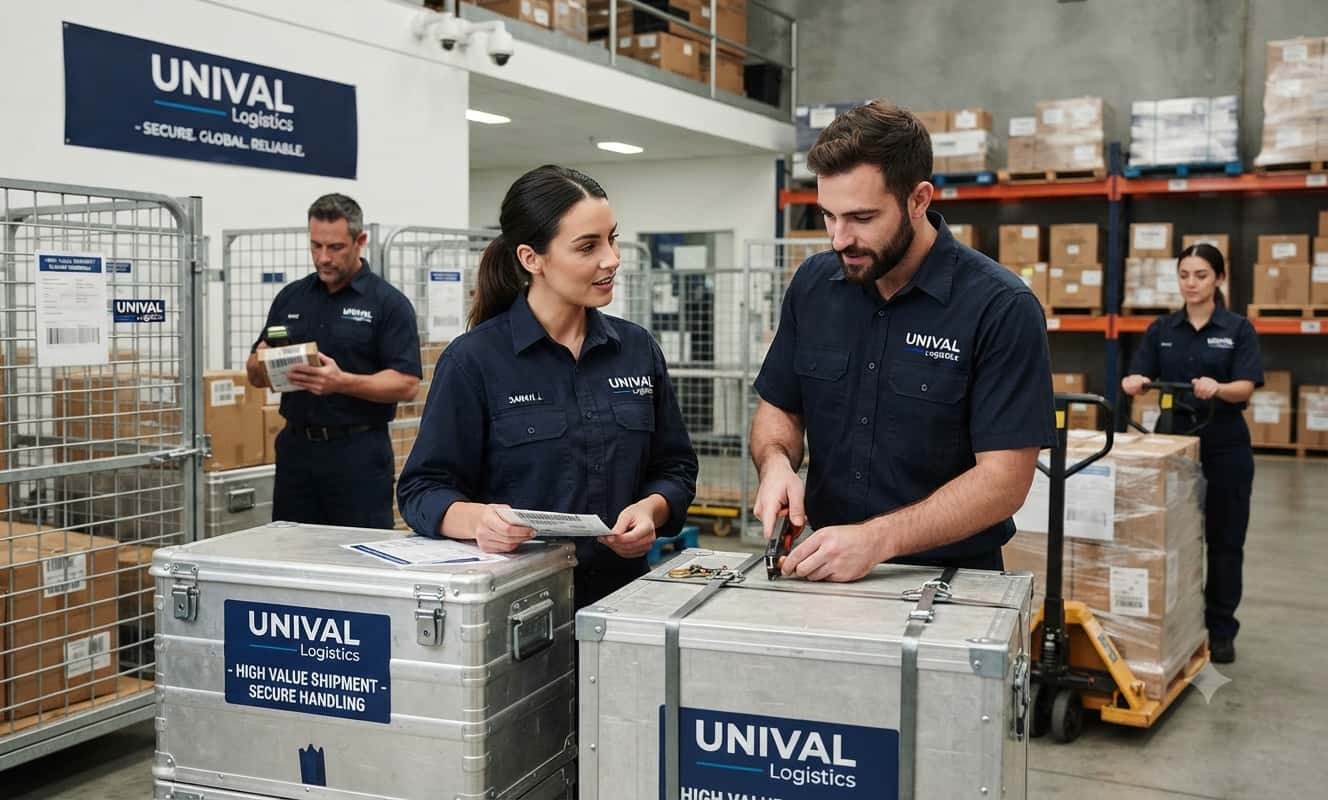
Summary: High-value goods need careful protection throughout transportation. Theft, loss and damage can occur when packaging is weak, shipment information is inaccurate, delivery controls are unclear or insurance is inadequate. This guide explains practical ways to reduce these risks. It covers shipment assessment, discreet packaging, documentation, tracking, secure handover, insurance and claims preparation. It also explains how businesses can create consistent security procedures and manage shipping costs. UNIVAL Logistics helps customers understand important protection requirements before dispatch.
Overview: A valuable shipment may contain goods that are expensive, rare, sensitive or difficult to replace. Its financial value can make it a target for theft, while poor handling or incomplete records can make a loss harder to investigate. Security should therefore be considered at every stage, from preparation and collection to transportation and final delivery. No shipping method can remove every risk, but a structured process can reduce common vulnerabilities. By selecting suitable packaging, maintaining accurate records, using appropriate tracking and confirming insurance conditions, senders can make more informed decisions. UNIVAL Logistics encourages customers to treat shipment security as a complete process rather than relying on a single protective measure.
Key Takeaways:
- Assess the value and security needs of each shipment before dispatch.
- Use strong, discreet packaging that protects the contents.
- Verify recipient details and keep accurate shipment records.
- Select tracking and delivery verification suited to the goods.
- Confirm insurance coverage, exclusions and claim requirements.
- Limit unnecessary handling and clarify handover procedures.
- Work with UNIVAL Logistics to review practical shipping requirements.
Quick Answer
Prevent transit theft and loss by assessing shipment risks, using secure and discreet packaging, verifying recipient details, monitoring tracking, confirming delivery and arranging suitable insurance before dispatch.
Why High-Value Shipments Need Extra Protection
Valuable goods can create greater financial exposure when something goes wrong during transportation. A missing parcel may represent a substantial loss, while damaged goods can require expensive repairs or replacement. Some items may also have sentimental, historical or commercial importance beyond their purchase price.
Common high-value shipments include jewelry, watches, precious metals, fine art, electronics, specialist equipment and confidential business materials. Each category has different security and handling requirements. A fragile painting needs suitable physical protection, while a valuable watch may need discreet packaging and careful delivery verification.
The risks can arise at several points. A parcel may be exposed during collection, sorting, loading, transportation, temporary storage or final delivery. Incorrect labels can cause misrouting. Weak packaging can reveal or expose the contents. Unclear delivery instructions can lead to an unsuccessful or unverified handover.
A reliable high value shipping plan considers the contents, their value, the route, the packaging and the available protection. UNIVAL Logistics encourages customers to review these factors before arranging transportation.
Rule 1: Assess the Shipment and Identify Potential Risks
The first step is to understand what is being shipped and what could happen during transit. A security plan should reflect the actual goods rather than follow the same process for every parcel.
Identify the Contents and Their Value
Prepare an accurate description of the goods. Record the item type, quantity, dimensions, weight, condition and estimated value. Keep supporting documents such as invoices, purchase receipts or appraisals.
For rare or collectible goods, consider obtaining a current professional valuation. The original purchase price may not reflect the current replacement or market value.
Accurate information can help determine packaging requirements and insurance eligibility. It can also support an investigation or claim if the shipment is lost or damaged.
Consider the Item’s Specific Risks
Different goods need different protection. Jewelry and watches may require discreet packaging and careful handling. Electronics may need cushioning against impact and protection from static or moisture where relevant. Artwork may require specialist packing and controlled handling.
Consider whether the item is fragile, unusually heavy, sensitive to temperature or difficult to replace. These details can influence the service and packaging choices.
Review the Route and Delivery Requirements
Consider the collection point, destination, expected transit time and delivery arrangements. Confirm whether the recipient can accept the parcel and whether any access restrictions apply.
For high-value goods, avoid leaving collection or delivery details unclear. A planned handover helps reduce confusion and makes the shipment easier to monitor.
UNIVAL Logistics can help customers review shipment details and identify important protection considerations before dispatch.
Rule 2: Use Secure, Discreet and Suitable Packaging
Packaging is one of the most important physical safeguards against theft and damage. It should protect the contents while avoiding unnecessary attention.
Choose Strong Outer Packaging
Use a durable container that matches the shipment’s weight, dimensions and fragility. Weak or damaged boxes may open during handling or expose the contents.
Choose packaging that can withstand normal transportation conditions. Heavy goods may require reinforced cartons or stronger containers. Fragile items may need fitted supports and additional cushioning.
Prevent Movement Inside the Package
Internal movement can cause damage and may weaken the package during transit. Use suitable cushioning to keep the contents stable without applying excessive pressure.
For valuable or delicate items, consider custom inserts or protective inner containers. Ensure that the packaging does not damage sensitive surfaces or components.
Keep the Contents Discreet
Avoid displaying product names, brand logos or descriptions that reveal the value of the contents. Use plain external packaging where suitable and permitted by the shipping service.
Discreet packaging can reduce unnecessary attention, but it should never replace accurate shipment declarations. Provide the correct contents description to the carrier or insurer whenever required.
Seal and Inspect the Package
Use suitable packing tape and secure all openings. Check the seams, corners and closure points before dispatch.
Photograph the finished package and retain a record of the shipping label. If tamper-evident materials are used, record their condition before collection.
UNIVAL Logistics encourages customers to choose packaging based on the actual shipment requirements rather than relying on appearance alone.
Rule 3: Verify Shipment Information and Maintain Accurate Records
Accurate records make shipments easier to identify, monitor and investigate. They can also support insurance reviews and delivery disputes.
Verify the Recipient’s Details
Check the recipient’s full name, business name where applicable, street address, unit number, city, state and ZIP code. Confirm the phone number and any delivery instructions.
A small address error can cause delays or misrouting. Do not assume that an address used for a previous shipment is still correct.
Use Clear Shipment Descriptions
Make sure the shipping documents accurately describe the goods. Avoid vague or misleading descriptions that may cause confusion during processing or a claim.
Record the number of packages, item quantities and relevant identifiers. Keep internal records consistent with the shipment documentation.
Photograph the Contents and Packaging
Take clear photographs before packing. Capture identifying features and any existing damage. Photograph the protective materials and the sealed outer package as well.
For expensive goods, retain invoices, appraisals and other documents that support the declared value. Store these records securely and make them available to authorized parties when needed.
Keep a Complete Shipment File
A useful shipment file may include the following:
- Purchase receipts, invoices or valuation documents.
- Photographs of the contents and completed package.
- Shipping labels and collection confirmations.
- Tracking details and insurance confirmation.
- Delivery records and relevant communication.
Good records help establish what was shipped, its condition and its value. UNIVAL Logistics recommends preparing this information before collection rather than trying to recreate it after a problem occurs.
Rule 4: Use Tracking, Secure Handling and Verified Delivery
Shipment visibility helps senders monitor progress and respond to unexpected events. However, tracking should be combined with suitable handling and delivery controls.
Choose an Appropriate Tracking Service
Select a service that provides tracking information suitable for the shipment’s value and urgency. Check which events are recorded and whether delivery confirmation is included.
For high-value goods, ask whether additional verification or handling options are available. Confirm what the service actually provides rather than assuming that all shipments receive the same level of monitoring.
Monitor Shipment Updates
Check tracking information after collection and during transportation. Watch for unusual delays, unexpected routing changes or delivery attempts that do not match the planned schedule.
If tracking stops updating or shows an unfamiliar status, contact the provider promptly. Keep a record of the tracking information and any responses received.
Limit Unnecessary Handling
Where suitable services are available, consider arrangements that reduce unnecessary transfers or handling. Fragile or valuable goods may need specific handling instructions.
Clear labels can communicate important requirements, but labels alone cannot guarantee careful treatment. The packaging and selected service must also support the shipment’s needs.
Confirm the Final Handover
For valuable shipments, ask whether signature confirmation or another delivery verification option is available. Confirm who is authorized to receive the parcel.
Avoid unattended delivery when the goods are difficult or expensive to replace. Arrange a suitable delivery time and retain the proof of handover.
UNIVAL Logistics encourages customers to consider tracking and delivery arrangements as part of the overall security plan.
Rule 5: Confirm Suitable Insurance Before Dispatch
Physical security measures reduce risk, but they cannot guarantee that a shipment will arrive without loss or damage. Insurance can help protect against the financial impact of covered events.
However, customers should understand the coverage before dispatch. A high declared value does not automatically mean that the full amount is insured.
Understand Declared Value and Shipping Insurance
Declared value and shipping insurance can have different meanings. A declared value may establish a carrier’s liability limit under its service terms. Separate insurance provides coverage according to the terms of a specific policy.
Ask whether the shipment has an actual insurance policy or only limited carrier liability. Request written confirmation of the available protection.
Check the Maximum Coverage Amount
Confirm the maximum value that can be covered for one shipment. Some services have limits for specific goods or require approval for higher values.
Check whether the policy accepts the item’s category and valuation method. If the shipment contains multiple items, confirm how the total value is calculated.
Review Exclusions and Conditions
Read the policy carefully. Pay attention to exclusions for certain goods, packaging methods, destinations or types of loss.
Check whether theft, loss and accidental damage are covered. Review deductibles, documentation requirements and claim deadlines.
Some policies may require professional packing or proof of value. Failure to follow these conditions can affect a claim.
Keep Insurance Confirmation
Retain the policy or insurance confirmation, declared value and relevant shipment documents. Make sure the coverage is confirmed before collection.
UNIVAL Logistics encourages customers to review insurance conditions early so they can understand the protection available and identify any limitations.
Additional Security Measures for High-Value Shipments
The five rules provide a strong foundation, but some shipments may need additional controls. The right approach depends on the goods, value and transportation requirements.
Use Tamper-Evident Packaging Where Appropriate
Tamper-evident seals can help show whether a package may have been opened or interfered with. Record the seal condition before dispatch and check it at delivery.
These materials provide an additional indication of package integrity. They do not prevent every form of theft or guarantee that the contents remain untouched.
Restrict Access to Shipment Information
Share shipment details only with people who need them to complete their responsibilities. Avoid unnecessary public discussion of valuable contents, shipment schedules or delivery arrangements.
Businesses should use clear internal procedures for handling sensitive shipment information. Limit access to documents that contain personal, financial or commercially sensitive details.
Establish a Clear Escalation Process
Decide who should be contacted if a parcel is delayed, damaged or missing. Employees should know how to report a problem and which documents to preserve.
A prompt response can help identify the last recorded shipment event and preserve information needed for an investigation or insurance claim.
Common Mistakes That Increase Theft and Loss Risks
Many shipment problems begin with preventable errors. Recognizing these mistakes can help senders improve their processes.
Revealing valuable contents: External packaging that advertises the contents may attract unnecessary attention. Use discreet packaging while keeping official shipment descriptions accurate.
Using weak packaging: Poor-quality boxes and loose seals can expose goods or allow them to fall out. Select materials suited to the shipment’s weight and fragility.
Providing incorrect addresses: Missing unit numbers or outdated recipient details can cause misrouting. Verify all information before printing the label.
Ignoring tracking updates: Unusual shipment activity may go unnoticed if tracking is not monitored. Review important updates and report unexpected events promptly.
Assuming declared value is insurance: Carrier liability and separate insurance can have different terms. Confirm the exact protection before dispatch.
Failing to document the contents: Missing invoices, photographs or valuation records can complicate an investigation or claim. Prepare records before collection.
Leaving delivery arrangements unclear: An unattended parcel or an unauthorized recipient can create avoidable risks. Confirm the handover process in advance.
How Businesses Can Build a Consistent Shipping Security Process
Businesses that regularly send valuable goods should use a written procedure. A repeatable process helps employees follow the same security steps for each shipment.
Start with a shipment assessment. Identify the contents, value, fragility and delivery requirements. Select packaging that matches those details.
Next, verify the recipient information and prepare the shipment documents. Photograph the goods and sealed package. Confirm the tracking and insurance arrangements before collection.
Assign responsibility for monitoring the shipment and handling exceptions. Staff should know when to contact the shipping provider and how to preserve records if a parcel is delayed or damaged.
Review shipment incidents regularly. Look for repeated address errors, packaging failures or delivery problems. Use these findings to improve procedures.
UNIVAL Logistics encourages businesses to treat shipment security as an ongoing process. Consistent preparation can improve visibility, reduce avoidable errors and support better communication.
How UNIVAL Logistics Supports High-Value Shipping
Valuable goods need a shipping plan that considers security, packaging, documentation and insurance together. A standard parcel arrangement may not meet every requirement.
UNIVAL Logistics helps customers review shipment information and identify practical protection considerations before transportation. This includes the type of goods, package dimensions, weight, shipment value, collection details and delivery requirements.
Support for Different Valuable Goods
Jewelry, watches, electronics, artwork, precious metals and specialist equipment can each require different handling considerations. A suitable plan should reflect the item’s fragility, value and packaging needs.
UNIVAL Logistics encourages customers to explain the shipment’s requirements before booking. This helps clarify which details should be reviewed and what protection may be appropriate.
Clear Planning and Communication
A reliable shipping process depends on clear information. Customers should understand the collection arrangements, tracking options, delivery requirements and insurance conditions.
UNIVAL Logistics focuses on practical guidance and shipment planning so customers can make informed decisions about protecting valuable goods.
Understanding High-Value Shipping Costs
The cost of transporting valuable goods depends on more than package weight. Shipment value, packaging requirements, insurance eligibility and delivery arrangements can all influence the final quote.
The main cost categories include:
- Transportation service: Charges depend on shipment dimensions, weight, destination and delivery speed.
- Protective packaging: Reinforced cartons, custom containers, cushioning and tamper-evident materials may add preparation costs.
- Insurance or declared-value protection: Costs depend on eligible value, coverage terms, service limits and applicable deductibles.
- Special handling: Fragile, oversized or sensitive goods may require additional handling arrangements.
- Tracking and delivery verification: Additional monitoring, signature confirmation or specific delivery arrangements may affect the total.
- Collection and delivery: Scheduled collection, access restrictions and special delivery instructions can influence the quotation.
There is no universal price for every valuable shipment. A small jewelry parcel and a large piece of specialist equipment have different packaging and handling needs. Contact UNIVAL Logistics with the contents, value, package dimensions, weight and destination to discuss an appropriate quotation.
Important Disclaimer
All cost information should be treated as a baseline guide rather than a guaranteed quotation. Actual prices are subject to market fluctuations, supplier changes and variable logistics fees. Transportation, packaging, insurance, tracking and special handling charges may vary according to shipment requirements. Insurance availability and coverage are also subject to the applicable service or policy terms. Contact UNIVAL Logistics directly for the latest and most accurate prices before arranging your shipment.
Final Thoughts
Preventing theft and loss requires a complete approach to shipment security. Start by assessing the goods and identifying potential risks. Use suitable packaging, verify all shipment details and maintain clear records. Select appropriate tracking and delivery verification, then confirm insurance before dispatch.
No single measure can eliminate every transportation risk. However, consistent preparation can reduce preventable problems and make a loss easier to investigate.
For businesses and individuals arranging high value shipping, UNIVAL Logistics can help review important transportation and protection requirements. Careful planning, accurate documentation and clear communication can help protect valuable goods throughout their journey.
Frequently Asked Questions
1. What is the safest way to ship high-value items?
Use packaging suited to the contents, verify the recipient’s details, select appropriate tracking and delivery verification, and confirm suitable insurance. Keep photographs, valuation documents and shipment records before dispatch.
2. How can I prevent theft during transportation?
Use discreet external packaging, secure the parcel properly and select suitable handling and delivery arrangements. Limit access to shipment information and confirm who is authorized to receive the package.
3. Does tracking guarantee that a valuable shipment will not be lost?
No. Tracking provides visibility into recorded shipment events, but it cannot guarantee that loss or theft will not occur. Combine tracking with secure packaging, delivery verification and suitable insurance.
4. Is discreet packaging important for valuable goods?
Yes. Discreet packaging can avoid drawing unnecessary attention to the contents. However, official shipment descriptions and insurance documents must remain accurate wherever required.
5. Should I insure every high-value shipment?
Insurance may be appropriate when the financial impact of loss or damage would be significant. Review the available coverage, limits, exclusions and claim conditions before deciding.
6. What is the difference between declared value and full-value insurance?
Declared value may establish a carrier’s liability limit under its service terms. Full-value insurance refers to coverage intended to protect the eligible value under a separate policy or insurance arrangement. The exact terms must be confirmed in writing.
7. What documents should I keep before shipping valuable goods?
Keep purchase receipts, invoices, appraisals, photographs, shipment descriptions, tracking details and insurance confirmation. These records can help establish the contents, condition and value.
8. What should I do if a high-value parcel goes missing?
Contact the shipping provider promptly and report the missing parcel. Keep the tracking details, shipment documents and communication records. Notify the insurer within the required period and follow the investigation process.
9. Can insurance cover theft and accidental damage?
Some policies cover specified theft, loss or accidental damage events. Others have exclusions or restrictions. Review the policy wording and confirm the covered risks before dispatch.
10. How can businesses reduce repeated shipment losses?
Use a written shipping checklist, verify recipient details, standardize packaging, monitor tracking and retain shipment records. Review incidents to identify recurring problems and improve procedures.
11. Does secure packaging guarantee that a shipment will arrive safely?
No packaging can guarantee complete protection. Suitable materials can reduce risks from impact, movement and exposure, but should be combined with appropriate handling, tracking and insurance.
12. How can UNIVAL Logistics help with high-value shipping?
UNIVAL Logistics can help customers review shipment details, packaging considerations, handling requirements and suitable protection options. Share the contents, value and delivery information before arranging transportation.