

If you have come across 124.105.5.80 in a server log, network report, security alert, website record, or simply through a search result, it is natural to wonder what the numbers actually represent. An IP address can look like a random string, but it carries useful information about how a device or network is identified on the internet.
This particular address belongs to the 124.105.5.0/24 network, a range associated with AS9299, Philippine Long Distance Telephone Company (PLDT). Public network data currently places the broader 124.105.0.0/16 range in the Philippines.
However, an important distinction is often missed: knowing the network associated with an IP does not automatically tell you who personally used the address, where a person lives, or what they were doing online.
What Is 124.105.5.80?
124.105.5.80 is an IPv4 address. IPv4 addresses contain four numerical sections separated by periods, with each section ranging from 0 to 255.
In this case:
- 124 is the first octet.
- 105 is the second.
- 5 is the third.
- 80 is the fourth.
Together, these numbers identify a particular address within an IP network.
The address itself does not function like a website name. Instead, it can be used by network equipment to identify where internet traffic is coming from or where traffic should be delivered.
Is It a Public or Private IP Address?
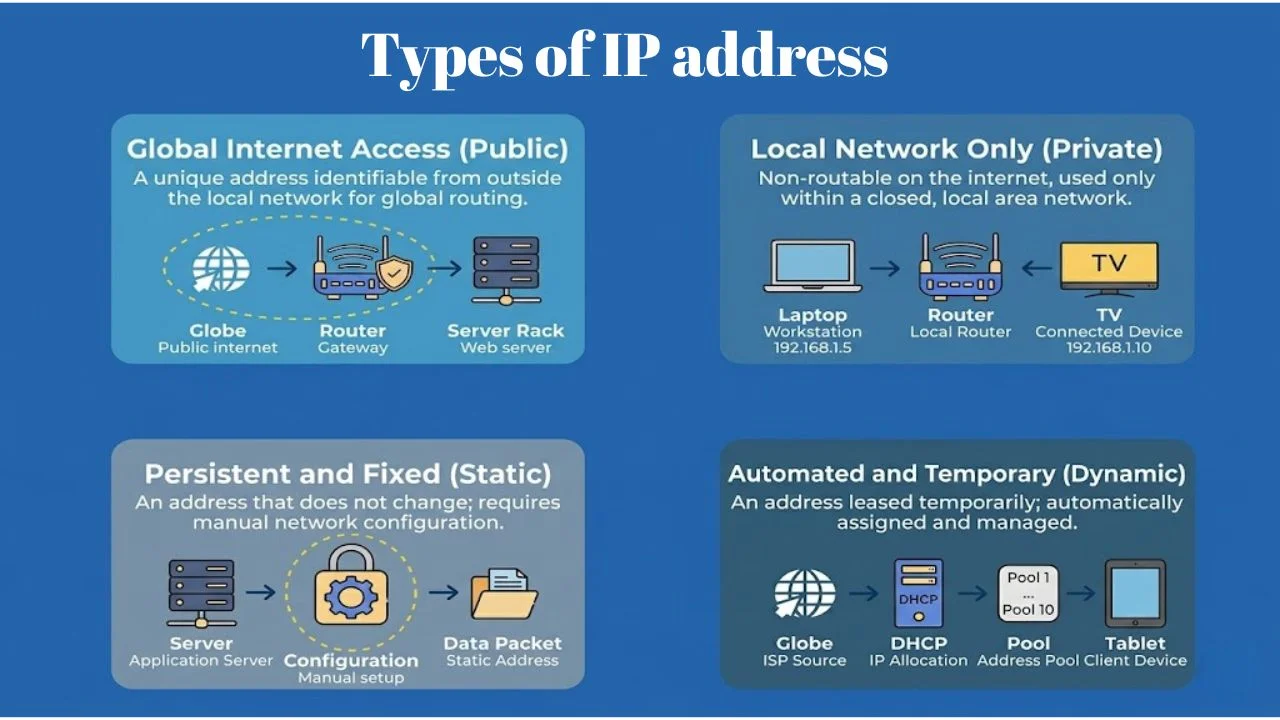
The address is a public IPv4 address, not one of the commonly reserved private address ranges used inside homes and offices.
Private IPv4 addresses typically include ranges such as 192.168.0.0/16, 10.0.0.0/8, and 172.16.0.0/12. An address beginning with 124 does not fall into those private ranges.
That means it can appear in internet-facing routing, server logs, security systems, and other publicly observable network information.
Which Network Is Associated With It?
Public IP intelligence data places 124.105.5.80 inside the 124.105.5.0/24 subnet. That subnet is listed under AS9299, associated with Philippine Long Distance Telephone Company.
The wider 124.105.0.0/16 range is also reported as being associated with the Philippines.
This is useful when investigating network traffic because an autonomous system number, or ASN, identifies the organization responsible for announcing a collection of IP prefixes on the internet.
What Does the /24 Network Mean?
A subnet such as 124.105.5.0/24 contains 256 IPv4 addresses, from 124.105.5.0 through 124.105.5.255.
Not every address necessarily represents an active server or publicly accessible service. Some may be unused, dynamically assigned, reserved for infrastructure, or used in ways that are not visible from public scans.
That is why seeing an address inside a particular subnet should not be interpreted as proof that every address in the range serves the same purpose.
| Item | 124.105.5.80 | 124.105.5.0/24 |
|---|---|---|
| Type | Individual IPv4 address | Network/subnet |
| Size | One address | 256 addresses |
| ASN | AS9299 | AS9299 |
| Reported country | Philippines | Philippines |
| Primary use | Specific network endpoint | Address range |
| Identification value | Individual address | Network-level context |
Does the IP Reveal an Exact Location?
No. This is one of the biggest misconceptions about IP addresses.
An IP lookup may provide an estimated country, region, city, ISP, or network operator. These results are based on databases, routing information, registration records, and geolocation techniques. They should be treated as approximate network information, not as a precise physical location.
For example, public information about the broader address range identifies the Philippines, while another third-party record has associated 124.105.5.80 with Talavera in Nueva Ecija.
Different databases can produce different city-level results. That does not necessarily mean one source is fraudulent; IP geolocation can change and is inherently less precise at the local level.
Can You Identify the Person Behind It?
Usually, no—not from the IP address alone.
An IP address can potentially tell an investigator about a network provider or routing organization. It does not normally provide a person’s name, home address, phone number, or other private identity information.
Internet service providers may have internal assignment records connecting an address to a customer at a particular time, but those records are not generally public.
This distinction matters enormously when interpreting security logs. An IP is a technical identifier, not a personal identity card.
Why Might This Address Appear in Your Logs?
There are many legitimate reasons.
You might see an unfamiliar public address because someone visited a website, connected to a service, accessed an application, triggered an automated request, or interacted with a network-facing system.
A real-world scenario makes this clearer. Imagine a website administrator notices repeated requests from 124.105.5.80. The administrator might investigate the request timestamps, URLs, HTTP methods, frequency, user-agent information, and authentication results. The IP is only one piece of the puzzle.
It would be premature to conclude that the visitor was malicious simply because the address appeared repeatedly.
Is 124.105.5.80 Dangerous?
An IP address is not inherently dangerous merely because it is public or belongs to a particular provider.
Security reputation depends on observed behavior, not simply the numerical address.
If an address appears in a firewall alert, examine what actually happened. Was there repeated login failure? Port scanning? Unusual request volume? Access to restricted resources? Or was it simply a normal page visit?
This approach produces a much more reliable assessment than treating every unfamiliar IP as suspicious.
How Can You Investigate It Safely?
If you need to research this address, start with basic network intelligence:
- Check the IP’s current ASN.
- Review the associated network range.
- Examine reverse DNS information if available.
- Check relevant abuse or reputation databases.
- Review your own server or firewall logs.
- Compare timestamps with the activity being investigated.
- Look for patterns rather than relying on one event.
IPinfo currently lists the 124.105.5.0/24 range under AS9299 and provides network-level information and traceroute data for the range.
My practical rule is simple: never make a security decision from an IP address alone when the surrounding logs are available.
IP Address vs Domain Name
An IP and a domain name can point toward the same online destination, but they serve different purposes.
A domain such as example.com is designed for humans to remember, while an IPv4 address is a numerical network identifier.
DNS technology connects human-readable domain names with IP addresses, allowing browsers and other applications to locate network resources without requiring users to memorize numerical addresses.
What Information Can Public IP Data Tell You?
Depending on the database and the address, you may find:
- Country or broad geographic region
- Network operator
- Autonomous system number
- Prefix or subnet
- Reverse DNS hostname
- Routing information
- Approximate geolocation
- Historical network observations
But availability varies. Public records do not guarantee that every IP will have a hostname, hosted website, precise location, or stable assignment history.
Why IP Information Can Change
Internet addresses are not always permanently assigned to one customer or device.
ISPs can allocate addresses dynamically, reorganize network infrastructure, change routing arrangements, or reassign resources. Consequently, information found in an IP database today may not describe exactly the same situation months later.
This is particularly important when investigating historical incidents. Always compare the timestamp of the event with the network information available for that period whenever possible.
A Better Way to Interpret This Address
The most useful way to think about 124.105.5.80 is as a network clue rather than a final answer.
Its placement in the 124.105.5.0/24 range and association with AS9299 provide meaningful infrastructure context. But determining what actually happened requires additional evidence: connection times, ports, protocols, application logs, DNS records, and traffic patterns.
That broader view prevents both false alarms and missed threats.
Also Read: Can I Cook With 30.6df496–j261x5? Safety Guide 2026
Conclusion
124.105.5.80 is a public IPv4 address associated with a network range in the Philippines. Current public IP data places its /24 subnet under AS9299 and Philippine Long Distance Telephone Company, while the wider 124.105.0.0/16 block is also associated with the Philippines.
The address can be useful for understanding network traffic, troubleshooting connectivity, examining logs, and researching infrastructure. But it should not be treated as proof of a person’s identity or exact physical location.
The smartest interpretation is contextual: use the IP as one piece of evidence, then verify the surrounding technical details before drawing conclusions.
FAQs
Is 124.105.5.80 a valid IP address?
Yes. It is a syntactically valid IPv4 address because each of its four octets falls between 0 and 255.
Which country is associated with this address?
Public IP range information currently associates the address range containing it with the Philippines.
Which ISP owns 124.105.5.80?
The subnet containing the address is currently listed under AS9299, Philippine Long Distance Telephone Company.
Can this IP reveal someone’s exact address?
No. Public IP geolocation generally provides approximate network or geographic information. It cannot reliably reveal a person’s exact street address.
Is this IP automatically malicious?
No. An unfamiliar IP is not automatically harmful. Its reputation should be evaluated alongside actual network behavior and relevant logs.
Why would I see this address in my server logs?
It could represent a visitor, automated service, network connection, application request, or another form of internet traffic. The surrounding timestamps and request details are necessary to understand the event.
What is the 124.105.5.0/24 range?
It is a subnet containing 256 IPv4 addresses, from 124.105.5.0 through 124.105.5.255. Public network data currently associates the range with AS9299.