
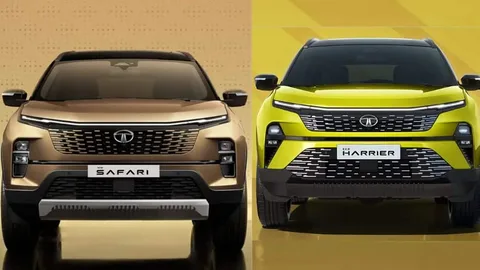
The Tata Harrier and Safari share parts of their engineering identity, but they serve different family arrangements. One is primarily a five-seat SUV; the other provides an additional row. That makes the Tata Harrier vs Tata Safari decision less about a badge and more about passenger numbers, luggage habits and whether a larger cabin earns its running costs. The right answer can change from one household to another.
Choose the seating mission before comparing engines
The Harrier uses two seating rows and provides a dedicated luggage space behind them. A family of four or five may value its straightforward arrangement, particularly when carrying suitcases or equipment for a long weekend. Its seating can feel less compromised when the full passenger capacity is occupied.
The Tata Safari has three rows, offering six- or seven-seat configurations depending on the grade. Some versions use captain seats in the middle, while others have a bench. A six-seat variant is not automatically more useful than a seven-seat one: check which layout lets regular passengers enter, sit and use child restraints comfortably.
A crucial Tata Harrier vs Tata Safari trade-off is luggage with the final row raised. The Safari’s extra seating flexibility uses space that might otherwise hold bags. Buyers who often travel with every seat occupied should physically test the remaining storage, not rely on a brochure picture of the boot with seats folded.
Powertrain options now require a model-year check
Both nameplates have been available with a 2.0-litre diesel engine and manual or automatic configurations on relevant variants. In January 2026, Tata introduced petrol-powered Harrier and Safari versions using a 1.5-litre turbocharged engine. Older comparisons that describe both models as diesel-only are therefore outdated.
The Tata Safari can appeal to a high-mileage family considering a diesel variant, while a petrol version may fit someone covering fewer annual kilometres. Neither conclusion is automatic: local fuel prices, use pattern, service needs and the purchase premium matter. Test the exact powertrain before deciding, particularly when carrying several passengers.
A fair engine comparison pairs similar transmission types and grades. A loaded six- or seven-seat vehicle can behave differently from a lightly occupied two-row SUV even when outputs are similar. Look for predictable throttle response, comfortable cruising and secure braking at legal road speeds.
| Decision factor | Harrier | Safari |
|---|---|---|
| Usual seating | Five | Six or seven by version |
| Luggage with all seats occupied | Dedicated area behind row two | More limited behind row three |
| Powertrain choices | Petrol and diesel in current range | Petrol and diesel in current range |
| Parking | Check sizeable five-seat footprint | Check extra length and turning space |
Evaluate comfort with the right passengers
The Tata Harrier vs Tata Safari comparison should include a route that reflects family usage. Ask older relatives to try the step-in height and seating posture. Let passengers assess rear headroom, seat cushion support and air-conditioning reach. A vehicle that feels luxurious in the front row may have a less suitable position for someone who frequently sits at the back.
Long-distance comfort is not just soft upholstery. Seat-belt position, ride control on patched roads and fatigue from wind or tyre noise can influence a full day’s journey. Try both models with similar passenger loading if possible and check whether an adjustable second-row seat affects access to the third.
The Safari’s third row adds versatility for occasional extra travellers, while the Harrier’s simpler cabin may make daily packing easier. Do not pay for a third row solely because a few distant relatives might use it once a year without confirming what it costs in money and storage.
Safety and equipment need like-for-like scrutiny
Review the applicable Bharat NCAP assessments for the exact Harrier and Safari generations, including covered configurations and test dates. Both models have received high assessments in relevant tests, but buyers should not assume every later grade has an identical equipment package. Check airbags, stability control, parking support and child-seat anchorage on the shortlisted variant.
The Tata Safari may offer features that differ by seating configuration or trim. Larger screens, sunroofs and advanced driver assistance can influence price, yet some households may prioritise a simpler version with the safety equipment they need. A driver-assistance system does not replace attentive driving.
Calculate the real ownership difference
Compare equivalent ex-showroom variants, then obtain written on-road quotes including taxes, registration and insurance. The larger SUV may attract different insurance and tyre expenses. Diesel servicing and petrol operating costs also need their own estimates. Finance comparison should use the actual down payment, loan amount, nominal rate, fees and total repayment.
A Tata Harrier vs Tata Safari buyer should examine annual kilometres and likely years of ownership. A lower monthly instalment achieved through extending tenure can result in greater total interest. Preserve room for fuel, service and travel rather than stretching the family budget to the most expensive trim.
Select the cabin that gets used, not merely admired
Choose the Harrier when five comfortable places and accessible luggage space cover almost every journey. Consider the Tata Safari when an extra row or specific six-seat configuration will genuinely earn its place. Test parking, seating and a loaded-drive scenario, then match the final invoice to a sustainable ownership budget.