

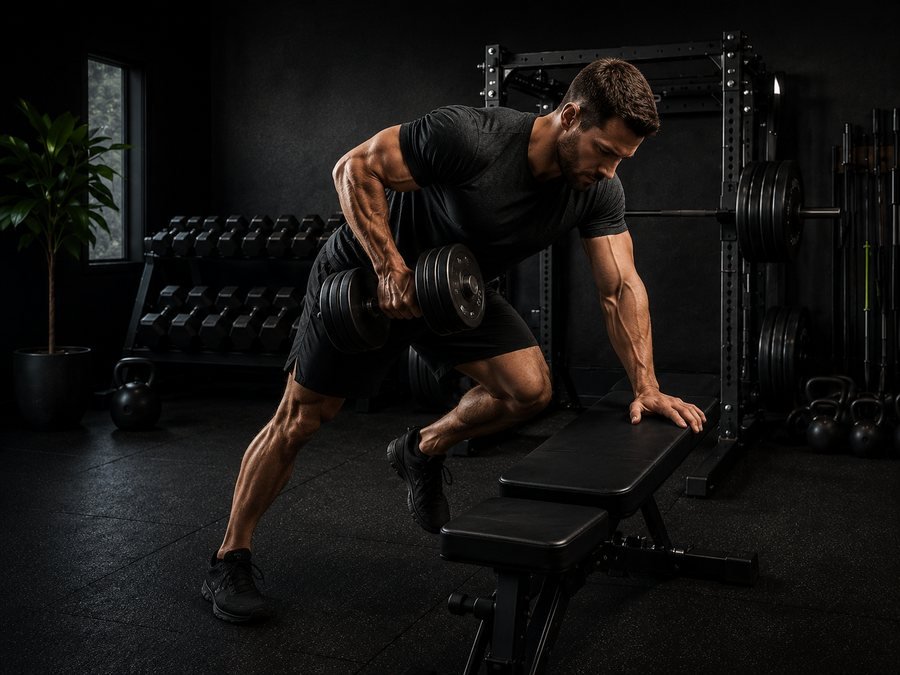
Starting a fitness routine doesn’t mean you need to spend hours in the gym or perform complicated exercises. Sometimes, a few basic movements with the right equipment are enough to build a good foundation. An adjustable bench is one piece of gym equipment that makes this easier. It gives you different workout positions, supports your body during exercises, and allows you to train several muscle groups without changing your entire setup.
For beginners, the best part is its simplicity. You don’t need advanced training experience to get started. With a little practice and proper form, an adjustable bench can become a regular part of your workout routine.
Why Should Beginners Use an Adjustable Bench?
An adjustable bench isn’t limited to one type of exercise. You can change its angle to a flat, incline, or upright position, depending on the movement you’re performing. This small adjustment makes a noticeable difference in how an exercise feels and which muscles receive more attention.
For someone new to strength training, having this flexibility is useful. You can start with simple movements and gradually try different exercises as your confidence improves.
Here are a few reasons beginners should consider using one:
- Supports different exercises: You can perform chest presses, shoulder exercises, dumbbell rows, and several other movements.
- Helps maintain proper posture: The bench provides support while you perform exercises, making it easier to focus on your movement.
- Works multiple muscle groups: You can train your chest, shoulders, arms, back, and legs using the same equipment.
- Allows workout variations: Changing the bench angle gives you different exercise options without needing additional machines.
- Suitable for home workouts: It fits into many home gym setups and works well with dumbbells.
7 Adjustable Bench Exercises Beginners Can Try
You don’t need to start with heavy weights. Focus on learning the movement first. Pick a weight that feels manageable and pay attention to how your body responds.
1. Flat Dumbbell Bench Press
<PRIVATE_PERSON> position the adjustable bench in a flat position and lie down with your feet resting firmly on the floor. Hold a dumbbell in each hand, keeping your palms facing forward.
Slowly lower the dumbbells towards your chest. Once you reach a comfortable position, push them upwards until your arms are extended without locking your elbows.
This exercise works the chest, shoulders, and triceps. Beginners should start with light dumbbells and avoid rushing through repetitions.
Suggested repetitions: 2 sets of 10 to 12 reps.
2. Incline Dumbbell Press
For this exercise, adjust the bench to an incline position, around 30 to 45 degrees. Sit back with a dumbbell in each hand and keep your feet firmly planted on the floor.
Bring the dumbbells towards your upper chest, then press them upwards in a controlled movement. Lower them slowly before starting the next repetition.
The incline position places more focus on the upper chest while also engaging the shoulders and triceps.
Suggested repetitions: 2 sets of 8 to 10 reps.
3. Seated Dumbbell Shoulder Press
Set the bench in an upright position. Sit with your back supported and hold a dumbbell in each hand at shoulder height.
Push both dumbbells overhead until your arms are nearly straight. Bring them back down slowly to the starting position.
This exercise targets the shoulder muscles and also involves the triceps. Don’t arch your lower back while pressing. Keep your movements controlled.
Suggested repetitions: 2 sets of 10 reps.
4. Chest-Supported Dumbbell Row
Set the bench at a slight incline and lie face down with your chest supported. Hold one dumbbell in each hand, allowing your arms to hang naturally.
Pull the dumbbells towards your waist by bending your elbows. Pause briefly, then lower them slowly.
This movement works the upper back and helps beginners practise rowing without putting too much pressure on the lower back.
Suggested repetitions: 2 sets of 10 to 12 reps.
5. Seated Dumbbell Bicep Curl
Adjust the bench to an upright or slightly inclined position. Sit comfortably with your back supported and hold dumbbells at your sides.
Bend your elbows and bring the dumbbells towards your shoulders. Lower them slowly without swinging your arms.
It’s a simple exercise, but proper technique matters. Avoid using momentum to lift the weights.
Suggested repetitions: 2 sets of 12 reps.
6. Dumbbell Bulgarian Split Squat
This exercise requires a little more balance, so beginners should first practise without weights.
Stand facing away from the bench and place one foot behind you on its padded surface. Keep your other foot firmly on the floor. Slowly bend your front knee and lower your body, then push through your front foot to return to standing.
Repeat the movement on the other leg.
It works the quadriceps, glutes, and hamstrings. Keep the bench stable and don’t place your rear foot too high if you’re still learning the movement.
Suggested repetitions: 2 sets of 8 reps per leg.
7. Bench-Supported Tricep Kickback
Set the bench in a flat position. Place one hand and the same-side knee on the bench while keeping your other foot on the floor. Hold a dumbbell in your free hand.
Keep your upper arm close to your body and bend your elbow. Extend your forearm backwards, then slowly return to the starting position.
This exercise targets the triceps. Perform the same movement with the opposite arm.
Suggested repetitions: 2 sets of 10 reps per arm.
A Simple Adjustable Bench Workout Plan for Beginners
Trying all exercises in one session isn’t necessary. A short routine is enough when you’re learning the basics.
Here is a simple workout schedule you can follow three days a week.
| Exercise | Sets | Repetitions |
|---|---|---|
| Flat Dumbbell Bench Press | 2 | 10 |
| Incline Dumbbell Press | 2 | 10 |
| Seated Shoulder Press | 2 | 10 |
| Chest-Supported Dumbbell Row | 2 | 10 |
| Seated Bicep Curl | 2 | 12 |
| Bench-Supported Tricep Kickback | 2 | 10 |
Keep at least one rest day between strength-training sessions. You can use the remaining days for walking, light stretching, or other activities you enjoy.
Tips to Follow Before Starting Your Workout
A few small habits make strength training safer and easier to follow. Beginners often focus too much on the number of repetitions, but there’s more to a good workout than that.
- Start with lighter weights: Learn the correct movement before increasing resistance.
- Warm up first: Spend around 5 to 10 minutes doing light activity and gentle mobility exercises.
- Check the bench position: Make sure the backrest and seat are locked securely before using them.
- Maintain proper posture: Keep your back supported when required and avoid unnecessary twisting.
- Don’t rush: Slow, controlled repetitions help you understand how each exercise works.
- Give your muscles time to recover: Rest between workouts and avoid training the same muscle groups hard every day.
- Pay attention to discomfort: Stop if you experience sharp pain or unusual discomfort.
How Often Should Beginners Use an Adjustable Bench?
If you’re new to strength training, three sessions per week offer a practical starting point. Each session doesn’t need to be long. Around 30 to 45 minutes is enough to practise several exercises without making the routine difficult to maintain.
As you become more comfortable, you can increase the repetitions or try slightly heavier dumbbells. Make changes gradually. There’s no need to increase everything at once.
Also, remember that recovery is part of training. Your muscles need time between sessions, especially when you’re introducing new movements.
Final Thoughts
An adjustable bench gives beginners plenty of ways to practise strength training without making things complicated. From chest presses and shoulder workouts to supported rows and leg exercises, the same bench helps you work on different parts of your body.
Start with basic movements, use manageable weights, and give yourself time to learn the correct technique. Some exercises will feel easy, while others may take a few sessions to understand. That’s perfectly fine.
The important thing is to build a routine that you feel comfortable following. Once the basic movements become familiar, adding new exercises to your adjustable bench workouts will feel much easier.